西双版纳摩托车英文版理论考试
1. The sign on the right indicates to stop and yield at the intersection ahead.

A. Right
B. Wrong
Answer: A
2. A correct measure to avoid tire burst of motor vehicles is to lower the tire pressure.
A. Right
B. Wrong
Answer: B
3. After speeding up to more than 60 km/hour, a motor vehicle driver may drive onto the driving lane directly.
A. Right
B. Wrong
Answer: B
4. Two parallel broken double-yellow lines indicate the position of a diversion lane.

A. Right
B. Wrong
Answer: A
5. Which one of following ways is the safest when driving a motor vehicle on this road?

A. Driving along the central line of the road
B. Driving along the right side of the road
C. Driving at the middle of the road
D. Driving along the left side of the road
Answer: B
6. When approaching the turning point of a road, in which of the following ways will motor vehicle drivers easily cause a traffic accident?
A. Driving ahead by occupying the opposite lane
B. Turning the steering wheel quickly when passing through the curve
C. Not reducing speed until driving onto the curve
D. Driving by the right side
Answer: ABC
7. The guide line of a changeable lane indicates that drivers can choose their direction at will.

A. Right
B. Wrong
Answer: B
8. When a head-on collision with another vehicle is unavoidable, what should the driver do?
A. Change head-on collision to side collision
B. Immediately turn the steering wheel to the right side to evade
C. Immediately apply emergency braking
D. Immediately turn the steering wheel to the left side to evade
Answer: C
9. Which one of the following is a safe way for motor vehicles to converge into an intersection marked with this sign?

A. Speeding up and driving into the traffic flow directly
B. Driving into the traffic flow behind the gray car on the main road
C. Driving into the traffic flow from the front of the red car on the main road
D. Turning on the indicator and driving into the flow directly
Answer: B
10. Under such circumstances, motor vehicle drivers should bypass on the left quickly.

A. Right
B. Wrong
Answer: B
11. It is not a bad habit for a driver to frequently change lanes.
A. Right
B. Wrong
Answer: B
12. The broken white line on the right side of the road indicates that drivers are allowed to change lanes by crossing the line.
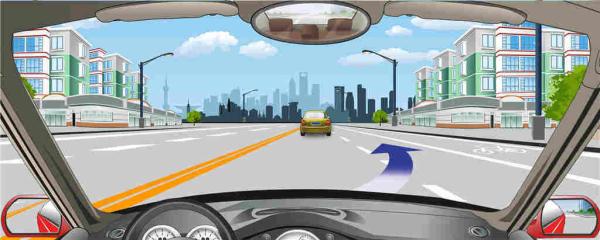
A. Right
B. Wrong
Answer: A
13. The sign on the right warns of a guarded railway intersection ahead.

A. Right
B. Wrong
Answer: B
14. The sign on the right indicates a section for ascertaining the distance between the vehicles 200 meters ahead.

A. Right
B. Wrong
Answer: A
15. The sign on the right indicates the road width ahead is limited to 3 meters.

A. Right
B. Wrong
Answer: A
16. It is illegal to change lanes without turning on indicators.
A. Right
B. Wrong
Answer: A
17. The sign on the right warns of an unguarded railway intersection ahead.

A. Right
B. Wrong
Answer: B
18. When driving in thick fog causing poor visibility on the expressway, the driver should apply emergency braking to stop at once.
A. Right
B. Wrong
Answer: B
19. The sign in front indicates a one-way lane after turning left.

A. Right
B. Wrong
Answer: A
20. How should lamps be used when a motor vehicle meets an oncoming bicycle on a narrow road or a narrow bridge at night?
A. Continuously change between low-beam and high-beam
B. Use clearance lamp
C. Use high-beam
D. Use low-beam
Answer: D
21. Drivers may turn left when seeing these hand signals.

A. Right
B. Wrong
Answer: A
22. The driver should turn left by the left side of the intersection central point.

A. Right
B. Wrong
Answer: A
23. Under such circumstance at an intersection. motor vehicle drivers should be prepared to stop and yield at any time.

A. Right
B. Wrong
Answer: A
24. Under such circumstances, the motor vehicle driver should voluntarily reduce speed and let the vehicle behind overtake.

A. Right
B. Wrong
Answer: A
25. What should be done by the driver who intends to overtake but the motor vehicle in front neither reduces its speed nor allows the right of way?
A. Continuously sounding the horn and accelerating to overtake
B. Accelerating and continuing to overtake
C. Refraining from overtaking
D. Following the vehicle in front closely and finding a chance to overtake
Answer: C
- 有国外驾照的外国人只需考科目一
-
- ENGLISH 英语科目一2027年新题库 驾照:C1 C2
- FRENCH 法语科目一2027年新题库 驾照:C1 C2
- GERMAN 德语科目一2027年新题库 驾照:C1 C2
- SPANISH 西班牙语科目一2027年新题库 驾照:C1 C2
- JAPANESE 日语科目一2027年新题库 驾照:C1 C2
- KOREAN 韩语科目一2027年新题库 驾照:C1 C2
- RUSSIAN 俄语科目一2027年新题库 驾照:C1 C2
- ARABIC 阿拉伯语科目一2027年新题库 驾照:C1 C2
- MOTORCYCLE 摩托车科目一2027年新题库 驾照:D E
- 没有国外驾照的外国人还需要考科目四
-
- ENGLISH 英语科目四2027年新题库 驾照:C1 C2
- KOREAN 韩语科目四2027年新题库 驾照:C1 C2
- MOTORCYCLE 摩托车科目四2027年新题库 驾照:D E