天津科目四英语题
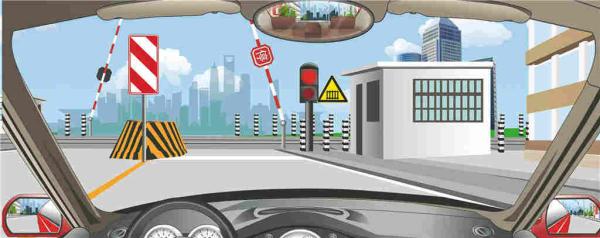
1. The sign in the red circle indicates that the left road is only for small vehicles.

A. Right
B. Wrong
Answer: B
2. The sign on the left warns of no passing on the right-hand road ahead.
A. Right
B. Wrong
Answer: B
3. The sign on the right warns of entering a tunnel, and requires reduced speed.

A. Right
B. Wrong
Answer: B
4. When encountering a road like this, motor vehicle drivers may make good use of neutral gear to coast.

A. Right
B. Wrong
Answer: B
5. The sign on the right indicates a passing bay ahead.

A. Right
B. Wrong
Answer: A
6. When driving on a road covered with ice and snow, the motor vehicle may spin or slide when increasing the speed urgently, due to the loss of vehicle stability.
A. Right
B. Wrong
Answer: A
7. Under such circumstances, what should be done by a motor vehicle driver in order to yield out of courtesy?

A. Driving at a higher speed
B. Closely following the vehicle in front
C. Driving at a higher speed by the right side
D. Driving at a lower speed by the right side
Answer: D
8. Mr. Yang drove an adapted minibus (capacity 9 people and carrying 64 passengers, including 62 kindergarten pupils). When driving in Ma Caogou Village of Yu Linzi County, the bus used the lane for oncoming traffic and had a head-on colision with a heavy dump truck. As a result of this accident, 22 people were killed and 44 injured. What are the main illegal acts in this case?
A. The truck exceeded the speed limit
B. Illegal adaptation of a motor vehicle
C. The minibus carried more passengers than capacity
D. Driving in the opposite direction lane
Answer: BCD
9. The broken white line rectangle area on the right side of the road indicates that long stopping is permitted here.

A. Right
B. Wrong
Answer: B
10. Motor vehicles are prohibited from stopping on the ramp of an expressway.
A. Right
B. Wrong
Answer: A
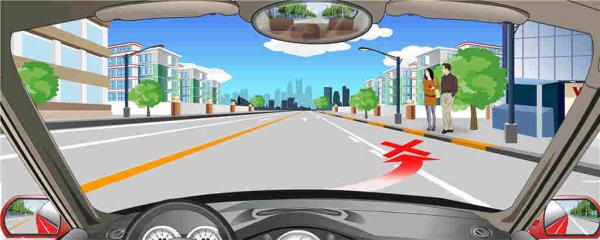
11. The yellow broken line on the curb indicates that vehicles are not allowed to stop and let passengers embark or disembark or load and unload freight at the roadside.
A. Right
B. Wrong
Answer: B
12. After setting off from the roadside, motor vehicle drivers should speed up as soon as possible and make a sharp left-turn in order to drive into the normal lane.
A. Right
B. Wrong
Answer: B
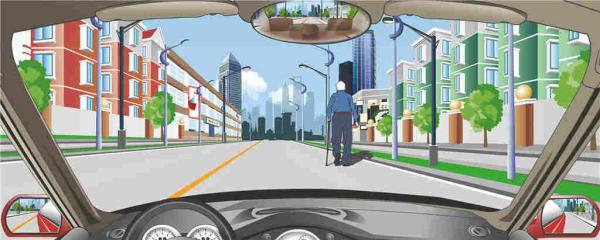
13. When encountering such pedestrians, motor vehicle drivers may continuously sound the horn to alert them to yield.
A. Right
B. Wrong
Answer: B
14. The main reason for this accident is that the pedestrian crossed the street in front of the motor vehicle.

A. Right
B. Wrong
Answer: B
15. The sign on the right indicates that overtaking is allowed on the section ahead.

A. Right
B. Wrong
Answer: B
16. When a motor vehicle catches fire, the driver should manage to park the vehicle in an open place far away from urban areas, buildings, trees, other motor vehicles and flammable materials.
A. Right
B. Wrong
Answer: A
17. The distance-ascertaining section of an expressway is used for the drivers to ascertain the safety distance when the speed is 100 kilometers per hour.

A. Right
B. Wrong
Answer: A
18. What should the motor vehicle driver do when the motor vehicle encounters the crosswalk in this situation?

A. Slow down and pass
B. Speed up and pass
C. Sound the horn and pass
D. Stop immediately
Answer: A
19. What should be done by motor vehicle drivers in order to yield politely to such pedestrians?

A. Speed up and bypass in front of the pedestrians
B. Speed up and bypass from behind the pedestrians
C. Reduce speed or stop to yield
D. Continuously sound the horn to alert the pedestrians
Answer: C
20. When approaching a vehicle on a narrow slope, which one of the following ways is correct?
A. The descending vehicle yields to the ascending
B. The vehicle which is further from the slope crest should yield
C. The ascending vehicle yields to the descending
D. If the descending vehicle has reached the midpoint while the ascending vehicle has not yet set out, the descending vehicle must yield.
Answer: A
21. The driver should pay attention to the left side when the motor vehicle passes this intersection.

A. Right
B. Wrong
Answer: B
22. The broken white reflective line on the road warns that drivers should drive at a lower speed on the road section ahead.

A. Right
B. Wrong
Answer: A
23. As shown in this picture, the vehicles intending to turn left are not allowed to drive into left-turn waiting area directly to wait for green light.

A. Right
B. Wrong
Answer: B
24. When passing another vehicle on a foggy day, what should drivers do?
A. Slow down and pass slowly
B. Maintain a safety distance
C. Properly use lamps
D. Drive at a high speed
Answer: ABC
25. The sign on the right warns of low-lying road ahead.

A. Right
B. Wrong
Answer: A
- 有国外驾照的外国人只需考科目一
-
- ENGLISH 英语科目一2026年新题库 驾照:C1 C2
- FRENCH 法语科目一2026年新题库 驾照:C1 C2
- GERMAN 德语科目一2026年新题库 驾照:C1 C2
- SPANISH 西班牙语科目一2026年新题库 驾照:C1 C2
- JAPANESE 日语科目一2026年新题库 驾照:C1 C2
- KOREAN 韩语科目一2026年新题库 驾照:C1 C2
- RUSSIAN 俄语科目一2026年新题库 驾照:C1 C2
- ARABIC 阿拉伯语科目一2026年新题库 驾照:C1 C2
- MOTORCYCLE 摩托车科目一2026年新题库 驾照:D E
- 没有国外驾照的外国人还需要考科目四
-
- ENGLISH 英语科目四2026年新题库 驾照:C1 C2
- KOREAN 韩语科目四2026年新题库 驾照:C1 C2
- MOTORCYCLE 摩托车科目四2026年新题库 驾照:D E