朝阳摩托车科目四题库英文
1. The sign on the right warns of a village or town ahead suggesting a 30km/hour speed.

A. Right
B. Wrong
Answer: A
2. Drivers may cross these central solid and broken yellow lines when overtaking.

A. Right
B. Wrong
Answer: B
3. What caused this drivers death in an accident?

A. Failing to fasten seatbelt
B. Positioned too close to the steering wheel
C. Failing to hold the steering wheel
D. Failing to turn on SRS
Answer: A
4. Mr. He drove his large bus with 53 passengers (permitted carrying capacity 47) to 454 km mark by 100m along the Yining-hefei Expressway in Nanjing jurisdiction, where he was tailgated by a heavy-type semitrailer tractor. The bus left the road, breaking through the guardrail and catching fire. 17 people were killed and 27 injured. Which of the following law-breaking acts did Mr. He commit?
A. Speeding
B. Exceeding the carrying capacity of the motor bus
C. Driving a motor vehicle overdue for annual inspection
D. Improper operation
Answer: B
5. When driving on this section of the road, drivers should observe closely and prepare to yield to the animals crossing the road.

A. Right
B. Wrong
Answer: A
6. What is the best way to make turns on this kind of curving mountain road?
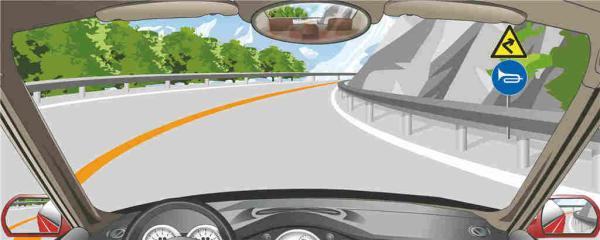
A. Drive along the outer side of the curve
B. Slow down, sound the horn and drive on the right
C. Borrow the opposite lane
D. Drive along the central line of the road
Answer: B
7. What is the meaning of the sign on the right?

A. Long-time parking permitted
B. Temporary parking permitted
C. Long waiting for passengers permitted
D. No parking
Answer: B
8. When driving on a road covered with ice and snow, drivers tend to encounter glare caused by reflection of light rays from the road surface.
A. Right
B. Wrong
Answer: A
9. Under such circumstances, what should be done by a motor vehicle driver in order to yield out of courtesy?

A. Driving at a higher speed
B. Closely following the vehicle in front
C. Driving at a higher speed by the right side
D. Driving at a lower speed by the right side
Answer: D
10. The sign on the right warns of a wildlife protection area ahead.

A. Right
B. Wrong
Answer: B
11. When driving onto the left lane, motor vehicle drivers are allowed to make a U-turn.

A. Right
B. Wrong
Answer: A
12. What should the driver do when seeing these hand signals?

A. Go straight and pass through the intersection
B. Pull over
C. Drive to the waiting area for turning left
D. Turn right at the intersection
Answer: D
13. Motor vehicles are not allowed to stop in this area for a long time.

A. Right
B. Wrong
Answer: A
14. The guide arrow on the road surface of this lane indicates that drivers are only permitted to continue straight at the intersection ahead.

A. Right
B. Wrong
Answer: B
15. When driving in thick or extremely thick fog, what should the driver do due to the low visibility in such weather?
A. Turn on the headlamp and drive slowly
B. Turn on the fog lamp and drive slowly
C. Park in a safe place
D. Drive slowly close to the roadside
Answer: C
16. How to run when encountering this situation at the intersection?

A. stop and wait
B. obey the traffic lights
C. run straight on the right side
D. may turn right
Answer: A
17. The sign on the right indicates an ETC lane at toll station ahead.

A. Right
B. Wrong
Answer: A
18. Under such circumstances, what should motor vehicle drivers do?

A. Follow the vehicle closely
B. Overtake the vehicle quickly on its left
C. Keep a long braking distance
D. Overtake the vehicle quickly on its right
Answer: C
19. When approaching each other at night in this situation, drivers should watch for the danger where the two motor vehicles headlamps meet (the sight dead zone).

A. Right
B. Wrong
Answer: A
20. A driver should accelerate in advance to overtake then it is likely to meet with oncoming vehicles.
A. Right
B. Wrong
Answer: B
21. What should the driver do when the motor vehicle encounters this situation?

A. Overtake immediately
B. Sound the horn continuously to warn
C. Maintain safety distance and overtake
D. Sound horn and speed up to overtake
Answer: C
22. If a motor vehicle enters a driving lane under this situation, what should the driver do?

A. Control the driving speed and follow the last vehicle
B. Speed up and cut in front of the second vehicle
C. Speed up and cut in front of the first vehicle
D. Cut in between two vehicles at will
Answer: A
23. When a tire bursts suddenly on the road, the driver should refrain from violently depressing the brake pedal in panic. Instead, he should try his best to change to a low gear and use engine braking to reduce the speed of the vehicle.
A. Right
B. Wrong
Answer: A
24. The sign on the right indicates a 200-meter distance from the gas station ahead.

A. Right
B. Wrong
Answer: A
25. Under such circumstances, what should be done by the motor vehicle driver?

A. Overtaking the vehicle in front on its left
B. Overtaking by occupying the opposite lane
C. Overtaking the vehicle in front on its right
D. Following the vehicle in front
Answer: D
- 有国外驾照的外国人只需考科目一
-
- ENGLISH 英语科目一2026年新题库 驾照:C1 C2
- FRENCH 法语科目一2026年新题库 驾照:C1 C2
- GERMAN 德语科目一2026年新题库 驾照:C1 C2
- SPANISH 西班牙语科目一2026年新题库 驾照:C1 C2
- JAPANESE 日语科目一2026年新题库 驾照:C1 C2
- KOREAN 韩语科目一2026年新题库 驾照:C1 C2
- RUSSIAN 俄语科目一2026年新题库 驾照:C1 C2
- ARABIC 阿拉伯语科目一2026年新题库 驾照:C1 C2
- MOTORCYCLE 摩托车科目一2026年新题库 驾照:D E
- 没有国外驾照的外国人还需要考科目四
-
- ENGLISH 英语科目四2026年新题库 驾照:C1 C2
- KOREAN 韩语科目四2026年新题库 驾照:C1 C2
- MOTORCYCLE 摩托车科目四2026年新题库 驾照:D E