天水摩托车科目四考试英文
1. When a motor vehicle breaks down on an expressway and cannot be moved away from the driving lane, the driver may conduct emergency repairs on the driving lane.
A. Right
B. Wrong
Answer: B
2. When a motor vehicle leaves an expressway, which of the following lamp should be turned on?
A. The left-turn indicator
B. The right-turn indicator
C. The hazard warning lamp
D. The headlamp
Answer: B
3. The sign on the right warns of a road section ahead under construction.

A. Right
B. Wrong
Answer: A
4. When encountering this situation on a mountainous road, motor vehicle drivers should overtake the vehicle in front by speeding up.

A. Right
B. Wrong
Answer: B
5. The sign in the red circle indicates that the left road is only for small vehicles.

A. Right
B. Wrong
Answer: B
6. The sign on the right indicates a section for ascertaining the distance between the vehicles 200 meters ahead.

A. Right
B. Wrong
Answer: A
7. When driving on an expressway, which of the following statements is correct?
A. Drivers may overtake on either the ramp, the acceleration lane or the deceleration lane
B. Drivers are prohibited from reversing, driving in the opposite direction or making a U turn by crossing the central dividing strip
C. Drivers may drive on the emergency lane in a non-emergency case
D. Drivers may test a motor vehicle or learn to drive
Answer: B
8. When the tire pressure is too low, what will happen if the tire changes its shape in waves and increases in temperature due to fast movement?
A. Unstable tire pressure
B. Even lower tire pressure
C. Driving resistance increases
D. Tire burst
Answer: D
9. What should the driver do in this situation?

A. Speed up and overtake from the left side
B. Sound the horn continuously to warn the bicycle
C. Follow the bicycle closely
D. Slow down and yield to the bicycle
Answer: D
10. Which of the following is an inflammable solid material?
A. Matches
B. Gun powder
C. Calcium carbide
D. Explosives
Answer: A
11. On a mountain road, what should the driver do in this situation?
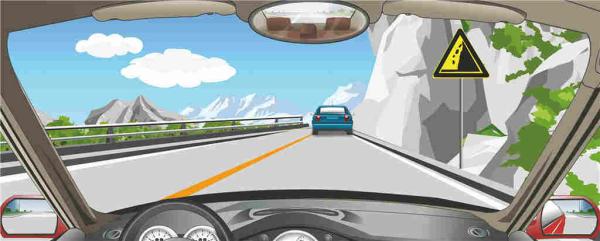
A. Drive on the left and speed up to bypass
B. Stop to observe and pass slowly
C. Observe closely and pass as soon as possible
D. Sound the horn several times and pass slowly
Answer: C
12. Mr. Ye drove a midsize van to Shangwen Road of Beitou Town. When passing a curve at the spot of 3 kilometers mark by 600 meters on the road, the van had a head-on collision at the speed of 40 kilometers per hour with Mr. Wang’s three-wheeled freight motorcycle carrying 19 passengers, killing 10 people and injuring 9. What are the main illegal acts committed by the two drivers?
A. Mr. Ye drove an unpermitted vehicle type
B. Mr. Wang drove a freight motorcycle to carry passengers
C. Mr. Ye exceeded the speed limit
D. Mr. Wang failed to follow the guidance of the traffic signal lights
Answer: BC
13. Which is the correct way to use a fire extinguisher?
A. Stand on the leeward side
B. Direct the fire extinguisher at the source of fire
C. Try to approach the source of fire as close as possible
D. Direct the fire extinguisher at the flames
Answer: B
14. Drivers needn’t yield to pedestrians who display such behavior.
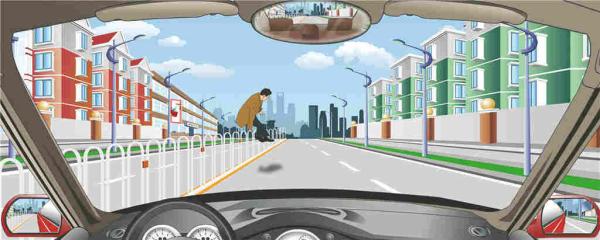
A. Right
B. Wrong
Answer: B
15. Which one of the following is the safest way to pass the oncoming vehicle on this road?

A. Driving along the central line
B. Driving with headlamp on
C. Yielding by the right side of the road
D. Yielding by the left side of the oncoming vehicle
Answer: C
16. What should the driver do if he encounters this situation at the intersection when driving straight?

A. Sound the horn to warn the other vehicle to yield
B. Speed up and pass in the front of the vehicle
C. Turn on the headlamp to warn the other vehicle to yield
D. Slow down or stop to yield
Answer: D
17. When parking temporarily in this situation, motor vehicle drivers are allowed to turn the steering wheel left to avoid sliding.

A. Right
B. Wrong
Answer: A
18. The sign on the right is an advance announcement of the highway destination.

A. Right
B. Wrong
Answer: B
19. When driving on road sections where safe sight distance is affected, such as the top of a ramp, what should drivers do to ensure safety?
A. Rush through
B. Use hazard lamp
C. Cut speed and sound the horn
D. Drive at will
Answer: C
20. When driving on a road covered with ice and snow, drivers tend to encounter glare caused by reflection of light rays from the road surface.
A. Right
B. Wrong
Answer: A
21. When encountering a school bus which stops at the right roadside and students are embarking or disembarking, and there is only one motor vehicle lane in each direction, motor vehicle drivers behind the bus should stop and wait.
A. Right
B. Wrong
Answer: A
22. When removing a wounded person suffering spinal fracture, the rescuer should never help the wounded person to walk. He may be carried away with a soft stretcher.
A. Right
B. Wrong
Answer: B
23. What is the meaning of the sign on the right?

A. Long-time parking permitted
B. Temporary parking permitted
C. Long waiting for passengers permitted
D. No parking
Answer: B
24. Which of the following measures is correct for rescuing a person sustaining full-body burns?
A. Cover the fire with sandy soil
B. Spray cool water to his body
C. Put out the fire by extinguisher
D. Help to remove the burning clothes
Answer: B
25. Which one of the following measures is correct when a motor vehicle encounters this situation at night?
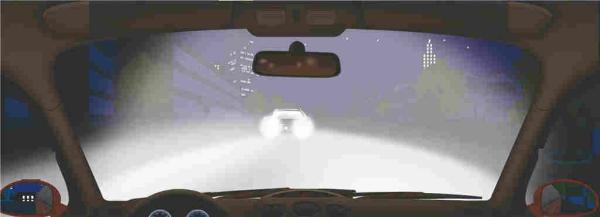
A. Keep driving at a normal speed
B. Drive at an increased speed to avoid light
C. Cut speed or stop to yield
D. Turn on high-beam to reject
Answer: C
- 有国外驾照的外国人只需考科目一
-
- ENGLISH 英语科目一2026年新题库 驾照:C1 C2
- FRENCH 法语科目一2026年新题库 驾照:C1 C2
- GERMAN 德语科目一2026年新题库 驾照:C1 C2
- SPANISH 西班牙语科目一2026年新题库 驾照:C1 C2
- JAPANESE 日语科目一2026年新题库 驾照:C1 C2
- KOREAN 韩语科目一2026年新题库 驾照:C1 C2
- RUSSIAN 俄语科目一2026年新题库 驾照:C1 C2
- ARABIC 阿拉伯语科目一2026年新题库 驾照:C1 C2
- MOTORCYCLE 摩托车科目一2026年新题库 驾照:D E
- 没有国外驾照的外国人还需要考科目四
-
- ENGLISH 英语科目四2026年新题库 驾照:C1 C2
- KOREAN 韩语科目四2026年新题库 驾照:C1 C2
- MOTORCYCLE 摩托车科目四2026年新题库 驾照:D E