哈密外国人考摩托车驾照
1. The driver should yield to other non-motor vehicles when the motor vehicle turns right at this Intersection.

A. Right
B. Wrong
Answer: A
2. Matches, sulfur and red phosphorus belong to which of the following dangerous chemicals?
A. Explosives
B. Oxidizing materials
C. Self-igniting articles
D. Inflammable solid materials
Answer: D
3. The sign in front indicates a 2-kilometer distance from the destination of the highway ahead.

A. Right
B. Wrong
Answer: A
4. Sounding the horn on a foggy day can arouse the attention of the opposite side. After hearing the horn from the opposite side, the driver should also sound their own horn to respond.
A. Right
B. Wrong
Answer: A
5. When a bicycle occupies the motor vehicle lane and obstructs the traffic, the driver should sound the horn continuously and speed up to bypass on the left of the bicycle.
A. Right
B. Wrong
Answer: B
6. When driving on a muddy road, the driver should hold the steering wheel firmly and speed up to pass through.
A. Right
B. Wrong
Answer: B
7. When a motor vehicle falls into water and the side door cannot be opened, which of the following methods is correct for self-rescue?
A. Smash the window glass
B. Close the windows
C. Make calls for help
D. Try to open the door with a tool
Answer: A
8. The sign on the right indicates that sounding the horn is prohibited here.

A. Right
B. Wrong
Answer: B
9. The sign indicates no overtaking on the section ahead.
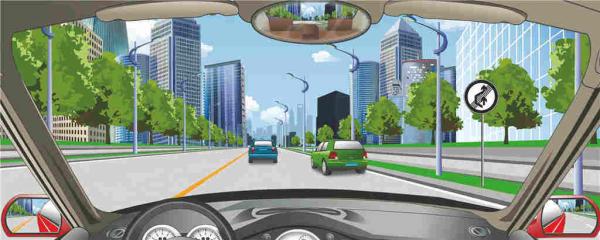
A. Right
B. Wrong
Answer: B
10. What should the driver do to ensure safe driving when the motor vehicle encounters this situation in a residential area?

A. Sound the horn to warn the pedestrians
B. Speed up and pass as quickly as possible
C. Retain a normal speed
D. Slow down and prepare to stop
Answer: D
11. What should the driver do in this situation?

A. Speed up and overtake from the left side
B. Sound the horn continuously to warn the bicycle
C. Follow the bicycle closely
D. Slow down and yield to the bicycle
Answer: D
12. A motor vehicle may stop and yield if it encounters any problem when changing to the driving lane from an acceleration lane.
A. Right
B. Wrong
Answer: B
13. How should the driver use vehicle lights when the motor vehicle enters this intersection?

A. Turn on the right-turn indicator
B. Turn on the hazard lamps
C. No need to turn on any indicators
D. Turn on the left indicator
Answer: C
14. The sign on the right is an advance announcement of the highway destination.

A. Right
B. Wrong
Answer: B
15. The driver should turn left by the left side of the intersection central point.

A. Right
B. Wrong
Answer: A
16. The sign on the right warns of a narrowed road on both sides ahead.

A. Right
B. Wrong
Answer: B
17. The road marker on the right side indicates that drivers may overtake by borrowing this road.

A. Right
B. Wrong
Answer: B
18. How many kinds of law-breaking acts are displayed in flash 2?

A. One
B. Two
C. Three
D. Four
Answer: B
19. As shown in the flash, the driver’s act is correct.

A. Right
B. Wrong
Answer: B
20. When a motor vehicle temporarily stops at night, which lamp should be turned on?
A. Front and rear fog lamp, clearance lamp and rear position lamp
B. Head lamp, clearance lamp and rear position lamp
C. Hazard lamp, clearance lamp and rear position lamp
D. Reverse lamp, clearance lamp and rear position lamp
Answer: C
21. When driving on an expressway, where should the driver park?
A. The service area
B. The acceleration lane
C. The deceleration lane
D. On the ramp
Answer: A
22. The motor vehicle should slow down and pass slowly in this situation.

A. Right
B. Wrong
Answer: A
23. When a motor vehicle deviates from the normal direction due to steering failure, what should the driver do?
A. Immediately steer and adjust
B. Reduce speed and stop the vehicle as early as possible
C. Steer to the side where there is no obstacle to evade
D. Steer to the side where there is an obstacle to evade
Answer: B
24. The sign on the right warns of no passing due to collapse on the road ahead.

A. Right
B. Wrong
Answer: B
25. When a motor vehicle slides sideways on a road covered by ice and snow, the driver should violently turn the steering wheel to adjust the direction.
A. Right
B. Wrong
Answer: B
- 有国外驾照的外国人只需考科目一
-
- ENGLISH 英语科目一2027年新题库 驾照:C1 C2
- FRENCH 法语科目一2027年新题库 驾照:C1 C2
- GERMAN 德语科目一2027年新题库 驾照:C1 C2
- SPANISH 西班牙语科目一2027年新题库 驾照:C1 C2
- JAPANESE 日语科目一2027年新题库 驾照:C1 C2
- KOREAN 韩语科目一2027年新题库 驾照:C1 C2
- RUSSIAN 俄语科目一2027年新题库 驾照:C1 C2
- ARABIC 阿拉伯语科目一2027年新题库 驾照:C1 C2
- MOTORCYCLE 摩托车科目一2027年新题库 驾照:D E
- 没有国外驾照的外国人还需要考科目四
-
- ENGLISH 英语科目四2027年新题库 驾照:C1 C2
- KOREAN 韩语科目四2027年新题库 驾照:C1 C2
- MOTORCYCLE 摩托车科目四2027年新题库 驾照:D E