承德摩托车英文驾考题库下载
1. When encountering such pedestrians while driving, a longer safety distance should be kept by drivers.
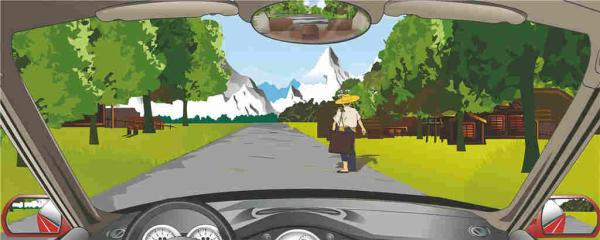
A. Right
B. Wrong
Answer: A
2. If a fast moving vehicle has a steering failure, using emergency braking can easily cause an overturn.
A. Right
B. Wrong
Answer: A
3. Which one of the following is the safest way to pass the oncoming vehicle on this road?

A. Driving along the central line
B. Driving with headlamp on
C. Yielding by the right side of the road
D. Yielding by the left side of the oncoming vehicle
Answer: C
4. When approaching another vehicle at night, why should the driver alternate between high-and-low-beam at a distance more than 150 meters?
A. Warn each other before passing
B. Driving habit
C. Easy to observe the situation ahead from either side
D. Courtesy
Answer: C
5. When a tire suddenly bursts on the road, what should not be done by the driver?
A. Keep calm and release the accelerator pedal slowly
B. Hold the steering wheel firmly to ensure the vehicle goes straight
C. Apply emergency braking and stop the vehicle in the shortest possible time
D. Gently depress the brake pedal after the vehicle slows down
Answer: C
6. The sign on the right indicates a section for ascertaining the distance between the vehicles 200 meters ahead.

A. Right
B. Wrong
Answer: A
7. Under such circumstances, what should motor vehicle drivers do?

A. Guard against the sideslip of motor vehicles
B. Guard against the crossing of pedestrians
C. Speed up and pass through as quickly as possible
D. Continuously sound the horn
Answer: B
8. When a motor vehicle catches fire, the driver should swiftly turn off the engine and open the hood to extinguish the fire.
A. Right
B. Wrong
Answer: B
9. Motor vehicles are permitted to follow the guidance of the arrow in this picture and enter the lane of an expressway.

A. Right
B. Wrong
Answer: B
10. What should the driver do in case the public bus suddenly pulls out from this bus station?
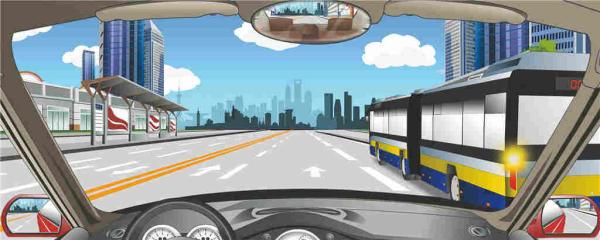
A. Stop behind the public bus
B. Overtake the public bus rapidly
C. Slow down and overtake the public bus slowly
D. Sound the horn continuously to warn the public bus
Answer: C
11. When driving in thick or extremely thick fog, what should the driver do due to the low visibility in such weather?
A. Turn on the headlamp and drive slowly
B. Turn on the fog lamp and drive slowly
C. Park in a safe place
D. Drive slowly close to the roadside
Answer: C
12. When the rear wheels of a motor vehicle skid sideways on a muddy road, the driver should turn the steering wheel in the opposite direction of the side skid.
A. Right
B. Wrong
Answer: B
13. The sign on the right warns of traffic signals ahead.

A. Right
B. Wrong
Answer: A
14. How many kinds of law-breaking acts are displayed in flash 1?

A. One
B. Two
C. Three
D. Four
Answer: B
15. How should the driver use vehicle lights when the motor vehicle leaves a roundabout?
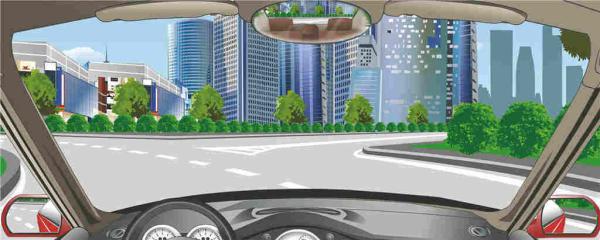
A. Turn on the left-turn indicator
B. Turn on the hazard lamps
C. No need to turn on any indicators
D. Turn on the right-turn indicator
Answer: D
16. The sign on the right warns of no passing due to collapse on the road ahead.

A. Right
B. Wrong
Answer: B
17. When rescuing a wounded person suffering from spinal fracture, which of the following measures should be taken?
A. Prevent heat loss
B. Rescue the wounded person with a soft stretcher
C. Keep the wounded part in position with a sling
D. Help the wounded person when walking
Answer: C
18. When the electric equipment and gasoline of a motor vehicle catches fire, the driver may extinguish the fire with water.
A. Right
B. Wrong
Answer: B
19. Under such circumstances, the driver should stop the vehicle and yield to pedestrians.

A. Right
B. Wrong
Answer: A
20. When encountering an emergency on a highway, the driver should not drastically turn to evade.
A. Right
B. Wrong
Answer: A
21. Which one of the following statements is the safest measure for a motor vehicle driver to take on this kind of road?

A. Accelerate to overtake the vehicle in front as soon as possible
B. Sound the horn to warn the vehicle in front to yield
C. Follow the vehicle in front and keep a certain distance
D. Overtake the vehicle in front from its righthand
Answer: C
22. When driving on road sections where safe sight distance is affected, such as the top of a ramp, what should drivers do to ensure safety?
A. Rush through
B. Use hazard lamp
C. Cut speed and sound the horn
D. Drive at will
Answer: C
23. Motor vehicles can turn right when driving into an intersection with this traffic signal.

A. Right
B. Wrong
Answer: A
24. The sign on the right warns of low-lying road ahead.

A. Right
B. Wrong
Answer: A
25. Once inflammable gas causes a fire disaster, it should be put out with water in good time.
A. Right
B. Wrong
Answer: B
- 有国外驾照的外国人只需考科目一
-
- ENGLISH 英语科目一2026年新题库 驾照:C1 C2
- FRENCH 法语科目一2026年新题库 驾照:C1 C2
- GERMAN 德语科目一2026年新题库 驾照:C1 C2
- SPANISH 西班牙语科目一2026年新题库 驾照:C1 C2
- JAPANESE 日语科目一2026年新题库 驾照:C1 C2
- KOREAN 韩语科目一2026年新题库 驾照:C1 C2
- RUSSIAN 俄语科目一2026年新题库 驾照:C1 C2
- ARABIC 阿拉伯语科目一2026年新题库 驾照:C1 C2
- MOTORCYCLE 摩托车科目一2026年新题库 驾照:D E
- 没有国外驾照的外国人还需要考科目四
-
- ENGLISH 英语科目四2026年新题库 驾照:C1 C2
- KOREAN 韩语科目四2026年新题库 驾照:C1 C2
- MOTORCYCLE 摩托车科目四2026年新题库 驾照:D E