来宾摩托车英文题库手机APP
1. Drivers may go straight and pass through when traffic police give these hand signals.

A. Right
B. Wrong
Answer: B
2. What should be done by the driver who intends to overtake but the motor vehicle in front neither reduces its speed nor allows the right of way?
A. Continuously sounding the horn and accelerating to overtake
B. Accelerating and continuing to overtake
C. Refraining from overtaking
D. Following the vehicle in front closely and finding a chance to overtake
Answer: C
3. The red car is allowed to drive on this lane.

A. Right
B. Wrong
Answer: B
4. Where is the proper parking place for breakdown motor vehicles stopping for examination?
A. In the far outer lane
B. In the inner lane
C. In the emergency lane
D. Entrance area of the ramp
Answer: C
5. What should drivers keep in mind when driving on a mountainous road?
A. Keep a safe distance
B. Avoid occupancy of another lane when making a turn
C. Downshift in advance when ascending an abrupt slope
D. Taking full advantage of engine braking when descending a long slope
Answer: ABCD
6. A motor vehicle may stop and yield if it encounters any problem when changing to the driving lane from an acceleration lane.
A. Right
B. Wrong
Answer: B
7. The sign in front gives information about the direction of road exits.

A. Right
B. Wrong
Answer: A
8. When there is no bandage for rescuing a wounded person, towels, handkerchiefs, bed sheets and stockings can all be used for dressing.
A. Right
B. Wrong
Answer: A
9. What should the driver do when the motor vehicle encounters this situation?

A. Overtake immediately
B. Sound the horn continuously to warn
C. Maintain safety distance and overtake
D. Sound horn and speed up to overtake
Answer: C
10. The sign on the right indicates a 2-kilometer distance from the Donglushan Service Area on the highway.

A. Right
B. Wrong
Answer: A
11. When driving in a strong wind, drivers should abruptly turn the steering wheel to return to the original direction if they feel the vehicle deviates horizontally due to a strong gale.
A. Right
B. Wrong
Answer: B
12. When there is a braking failure on a downhill road, what should not be done by the driver?
A. Steering the motor vehicle to the uphill direction
B. Stopping the vehicle by rubbing the vehicle body against the rocks or trees on roadside
C. Driving to the emergency lane and stop the vehicle there
D. Pulling up the stopping brake or change the gear to two positions lower
Answer: D
13. The sign on the left warns that there are vehicles converging into the intersection on the left.
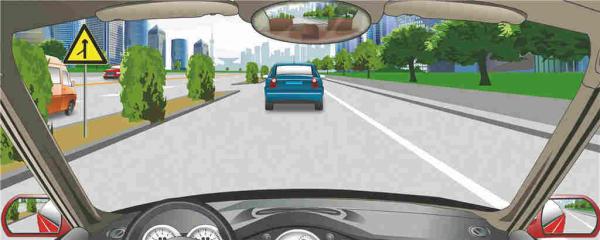
A. Right
B. Wrong
Answer: A
14. Which one of the following ways to pass this intersection is correct?

A. Turn left or right
B. Drive straight or turn left
C. Turn left
D. Drive straight or turn right
Answer: D
15. When seeing this sign, the driver should slow down promptly.

A. Right
B. Wrong
Answer: A
16. What should be given attention when setting off in this weather?

A. Turning on the high-beam
B. Turning on the front and rear fog lamps
C. Turning on the left indicator only
D. Continuously sounding the horn
Answer: B
17. When encountering such a situation, the vehicles should cut speed or stop to yield as approaching each other.

A. Right
B. Wrong
Answer: A
18. The sign on the right warns of a one-way tunnel ahead.

A. Right
B. Wrong
Answer: B
19. When two vehicles approach each other on a foggy day, what is the best method of safe driving?
A. Turn on the high-beam
B. Slowdown and maintain a large safety distance
C. Turn on the low-beam
D. Turn on the fog lamp
Answer: B
20. The sign on the right warns of a dangerous mountainside road on the left of the road ahead.

A. Right
B. Wrong
Answer: B
21. When the fuel of a motor vehicle catches fire, which of the following things cannot be used to put out the fire?
A. Sandy soil on the roadside
B. Cotton-padded clothes
C. Overalls
D. Water
Answer: D
22. When a motor vehicle encounters this situation at a crosswalk, the driver must slow down and pass slowly.

A. Right
B. Wrong
Answer: B
23. What is the meaning of the sign on the right?

A. Long-time parking permitted
B. Temporary parking permitted
C. Long waiting for passengers permitted
D. No parking
Answer: B
24. If a motor vehicle breaks down or causes a traffic accident on the expressway and cannot run normally the vehicle may be towed by any accompanying motor vehicles.
A. Right
B. Wrong
Answer: B
25. Motor vehicle drivers may make a U-turn in the broken line area as long as it will not affect the normal traffic flow.

A. Right
B. Wrong
Answer: A
- 有国外驾照的外国人只需考科目一
-
- ENGLISH 英语科目一2026年新题库 驾照:C1 C2
- FRENCH 法语科目一2026年新题库 驾照:C1 C2
- GERMAN 德语科目一2026年新题库 驾照:C1 C2
- SPANISH 西班牙语科目一2026年新题库 驾照:C1 C2
- JAPANESE 日语科目一2026年新题库 驾照:C1 C2
- KOREAN 韩语科目一2026年新题库 驾照:C1 C2
- RUSSIAN 俄语科目一2026年新题库 驾照:C1 C2
- ARABIC 阿拉伯语科目一2026年新题库 驾照:C1 C2
- MOTORCYCLE 摩托车科目一2026年新题库 驾照:D E
- 没有国外驾照的外国人还需要考科目四
-
- ENGLISH 英语科目四2026年新题库 驾照:C1 C2
- KOREAN 韩语科目四2026年新题库 驾照:C1 C2
- MOTORCYCLE 摩托车科目四2026年新题库 驾照:D E