广东英语科目四试题和答案
1. The sign on the right warns for children on the section ahead.
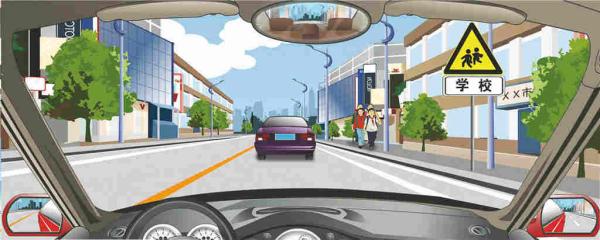
A. Right
B. Wrong
Answer: A
2. This road marker indicates that the minimum speed for this road section is 60 km/hour.

A. Right
B. Wrong
Answer: B
3. What should the driver do to ensure safe driving when the motor vehicle encounters this situation in a residential area?

A. Sound the horn to warn the pedestrians
B. Speed up and pass as quickly as possible
C. Retain a normal speed
D. Slow down and prepare to stop
Answer: D
4. The guide arrow on the road surface of this lane indicates that there is an intersection on the right side of the road.

A. Right
B. Wrong
Answer: B
5. A motor vehicle should not pass the level crossing rapidly in this situation.

A. Right
B. Wrong
Answer: A
6. When encountering a school bus which stops at the right roadside and students are embarking or disembarking, and there are three motor vehicle lanes in each direction, motor vehicle drivers on the left lane behind the bus should stop and wait.
A. Right
B. Wrong
Answer: B
7. What should the driver do if the back wheel slides to the right on a muddy road?
A. Continuously speed up
B. Turn right
C. Turn left
D. Apply emergency brake
Answer: B
8. The sign in front indicates a one-way lane after turning left.

A. Right
B. Wrong
Answer: A
9. Sideslip happens most easily on which one of the following road surfaces?
A. Dry concrete road
B. Road surface at the beginning of rain
C. Damp concrete road surface
D. Road in heavy rain
Answer: B
10. What should be taken note of by drivers in this situation?

A. The motor vehicles on the left side
B. The motor vehicles on the right side
C. The motor vehicles behind
D. The motor vehicles in front
Answer: A
11. When there is a sudden braking failure on a downhill road, what should be done by the driver?
A. Driving to an emergency lane and reducing speed to stop
B. Dropping the gear by two positions
C. Changing to the reverse gear to force the vehicle to stop
D. Reducing speed by pulling up the handbrake
Answer: A
12. After a tire bursts and before the driver can control the speed of the vehicle, he should not risk using the foot brake to stop the vehicle. Otherwise, a horizontal swing of the vehicle can cause greater danger.
A. Right
B. Wrong
Answer: A
13. When parking temporarily in this situation, motor vehicle drivers are allowed to turn the steering wheel right to avoid sliding.

A. Right
B. Wrong
Answer: A
14. If a fast-moving motor vehicle has a steering failure, using emergency braking will not cause an overturn.
A. Right
B. Wrong
Answer: B
15. When there is a braking failure on a downhill road, if there is no favorable terrain or opportunity to stop the vehicle, the driver should drop gear by one position or two positions, and control the speed by taking advantage of the braking role of the engine.
A. Right
B. Wrong
Answer: A
16. Matches, sulfur and red phosphorus belong to which of the following dangerous chemicals?
A. Explosives
B. Oxidizing materials
C. Self-igniting articles
D. Inflammable solid materials
Answer: D
17. Motor vehicles on this kind of road are only allowed to overtake the vehicle in front from left.

A. Right
B. Wrong
Answer: A
18. If a motor vehicle is unable to drive in heavy fog on an expressway due to an accident, what should the driver do?
A. The driver and all passengers should promptly get off the motor vehicle from the left side door
B. Set up a warning sign 100 meters behind the vehicle in the oncoming direction
C. Turn on the hazard lamp and the high-beam
D. Stand in a safe place outside the guardrail
Answer: D
19. Which of the following measures should be taken first when rescuing a wounded person suffering blood loss?
A. Observe
B. Dress the wounds
C. Stop bleeding
D. Inquire
Answer: C
20. When encountering a road like this, motor vehicle drivers may make good use of neutral gear to coast.

A. Right
B. Wrong
Answer: B
21. When a tire suddenly bursts on the road, what should not be done by the driver?
A. Keep calm and release the accelerator pedal slowly
B. Hold the steering wheel firmly to ensure the vehicle goes straight
C. Apply emergency braking and stop the vehicle in the shortest possible time
D. Gently depress the brake pedal after the vehicle slows down
Answer: C
22. The sign on the left indicates that drivers should stop to take a pass card at the toll station ahead.

A. Right
B. Wrong
Answer: A
23. When a tire suddenly bursts on the road, the driver should violently depress the brake pedal to reduce speed and stop the vehicle.
A. Right
B. Wrong
Answer: B
24. When driving on a damp and slippery road, drivers should avoid using the emergency brake to his best ability.
A. Right
B. Wrong
Answer: A
25. The sign on the right warns drivers to yield for oncoming motor vehicles.

A. Right
B. Wrong
Answer: B
- 有国外驾照的外国人只需考科目一
-
- ENGLISH 英语科目一2026年新题库 驾照:C1 C2
- FRENCH 法语科目一2026年新题库 驾照:C1 C2
- GERMAN 德语科目一2026年新题库 驾照:C1 C2
- SPANISH 西班牙语科目一2026年新题库 驾照:C1 C2
- JAPANESE 日语科目一2026年新题库 驾照:C1 C2
- KOREAN 韩语科目一2026年新题库 驾照:C1 C2
- RUSSIAN 俄语科目一2026年新题库 驾照:C1 C2
- ARABIC 阿拉伯语科目一2026年新题库 驾照:C1 C2
- MOTORCYCLE 摩托车科目一2026年新题库 驾照:D E
- 没有国外驾照的外国人还需要考科目四
-
- ENGLISH 英语科目四2026年新题库 驾照:C1 C2
- KOREAN 韩语科目四2026年新题库 驾照:C1 C2
- MOTORCYCLE 摩托车科目四2026年新题库 驾照:D E