湖州境外人员申请中国驾照考试题库摩托车英语
1. Under the circumstances shown in the flash, what should the driver do?
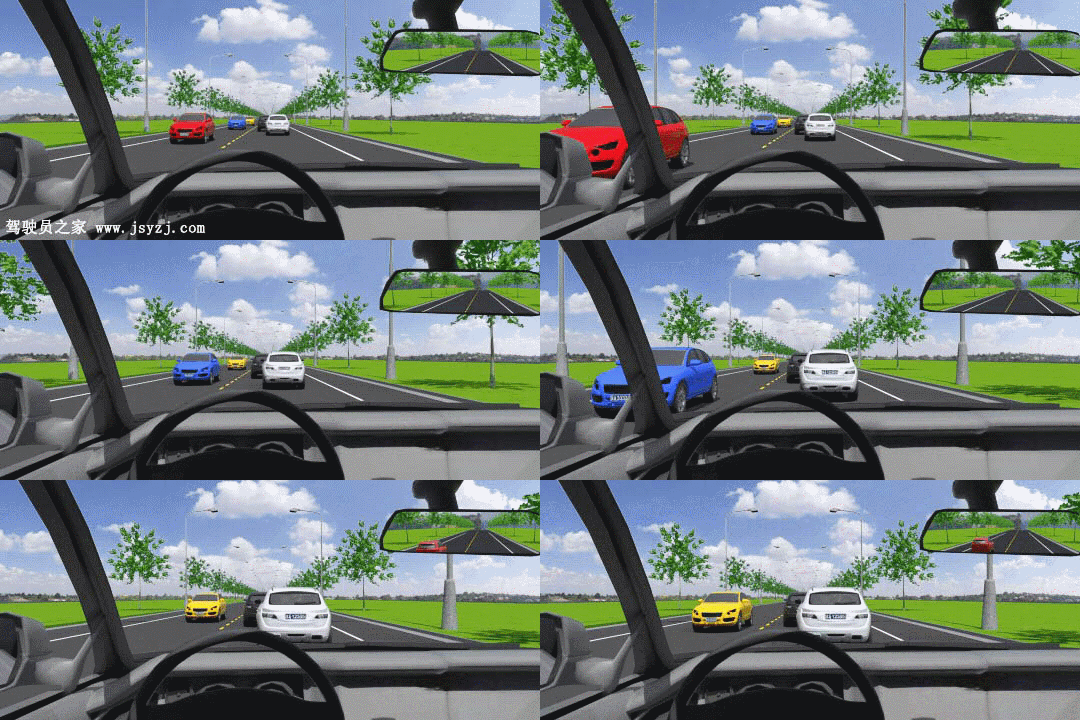
A. Find a chance to overtake the vehicle in front
B. Weave through motor vehicles ahead and pass
C. Reduce speed, stop, and wait in line
D. Sound the horn to urge vehicles in front
Answer: C
2. Drivers should drive at a lower speed when traffic police give these hand signals.
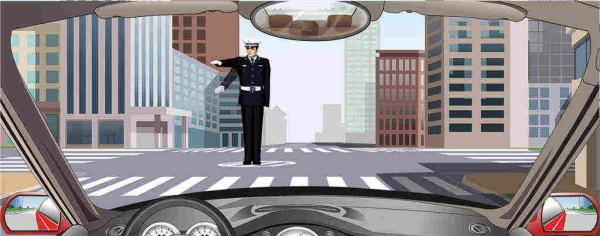
A. Right
B. Wrong
Answer: A
3. Drivers may temporarily cross these central broken and solid yellow lines when overtaking.

A. Right
B. Wrong
Answer: A
4. Drivers may temporarily cross these central solid double yellow lines when overtaking.

A. Right
B. Wrong
Answer: B
5. Motor vehicle drivers should use the windscreen wiper when setting off on a rainy day
A. Right
B. Wrong
Answer: A
6. When approaching motor vehicles ahead running at a normal speed on the highway, drivers behind may find a chance and weave through them swiftly.
A. Right
B. Wrong
Answer: B
7. When encountering such pedestrians, what should motor vehicle drivers do?

A. Bypass in front of the pedestrians
B. Bypass from behind the pedestrians
C. Sound the horn to alert the pedestrians
D. Voluntarily stop and yield
Answer: D
8. The sign on the right warns of no passing on either side of the road ahead.
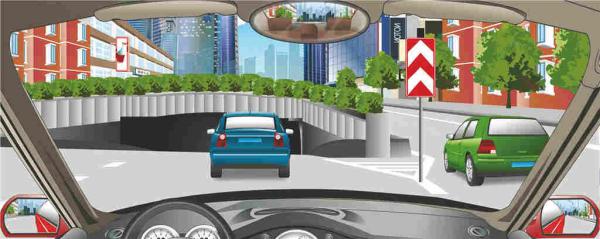
A. Right
B. Wrong
Answer: B
9. When finding a tire burst on the road, the driver should gently depress the brake pedal, reduce speed and stop the vehicle slowly.
A. Right
B. Wrong
Answer: A
10. Under such circumstance at an intersection. motor vehicle drivers should be prepared to stop and yield at any time.

A. Right
B. Wrong
Answer: A
11. The sign on the left indicates U-turn is allowed here.

A. Right
B. Wrong
Answer: A
12. Matches, sulfur and red phosphorus belong to which of the following dangerous chemicals?
A. Explosives
B. Oxidizing materials
C. Self-igniting articles
D. Inflammable solid materials
Answer: D
13. The sign in front indicates the allocation of roads ahead.

A. Right
B. Wrong
Answer: B
14. When the vehicle behind gives a notice of overtaking at night, the vehicle in front should not yield blindly.

A. Right
B. Wrong
Answer: A
15. When a motor vehicle has deviated from the straight moving direction and an accident is unavoidable, the driver should decisively and continuously depress the brake pedal so as to shorten the stopping distance and reduce the impact of vehicle collision.
A. Right
B. Wrong
Answer: A
16. The sign on the right warns that there are vehicles converging into the intersection on the right.

A. Right
B. Wrong
Answer: A
17. The sign on the right warns of a road section ahead under construction.

A. Right
B. Wrong
Answer: A
18. Under such circumstances, motor vehicles are not allowed to overtake.

A. Right
B. Wrong
Answer: A
19. What should a motor vehicle driver do to ensure safety when experiencing a breakdown at night?
A. Park in a safe place
B. Turn on hazard lamp
C. Turn on clearance lamp and tail lamp
D. Set up a warning sign in accordance with regulation
Answer: ABCD
20. When a motor vehicle equipped with ABS makes an emergency brake, the driver can tread the brake pedal heavily.
A. Right
B. Wrong
Answer: A
21. When encountering a road like this, motor vehicle drivers may make good use of neutral gear to coast.

A. Right
B. Wrong
Answer: B
22. When there is no bandage for rescuing a wounded person, towels, handkerchiefs, bed sheets and stockings can all be used for dressing.
A. Right
B. Wrong
Answer: A
23. Which is the wrong measure to avoid tire burst?
A. Reduce tire pressure
B. Check tires regularly
C. Remove foreign matters from the tire tread grooves timely
D. Replace tires that have cracks or deep cuts
Answer: A
24. A motor vehicle should not pass the level crossing rapidly in this situation.

A. Right
B. Wrong
Answer: A
25. When the speed indicated by the speed limit sign on the highway contradicts the speed indicated for the specific lanes the speed indicated for the specific lanes should prevail.
A. Right
B. Wrong
Answer: B
- 有国外驾照的外国人只需考科目一
-
- ENGLISH 英语科目一2026年新题库 驾照:C1 C2
- FRENCH 法语科目一2026年新题库 驾照:C1 C2
- GERMAN 德语科目一2026年新题库 驾照:C1 C2
- SPANISH 西班牙语科目一2026年新题库 驾照:C1 C2
- JAPANESE 日语科目一2026年新题库 驾照:C1 C2
- KOREAN 韩语科目一2026年新题库 驾照:C1 C2
- RUSSIAN 俄语科目一2026年新题库 驾照:C1 C2
- ARABIC 阿拉伯语科目一2026年新题库 驾照:C1 C2
- MOTORCYCLE 摩托车科目一2026年新题库 驾照:D E
- 没有国外驾照的外国人还需要考科目四
-
- ENGLISH 英语科目四2026年新题库 驾照:C1 C2
- KOREAN 韩语科目四2026年新题库 驾照:C1 C2
- MOTORCYCLE 摩托车科目四2026年新题库 驾照:D E