吉林市英语驾考科目四考试
1. When there is bleeding at the bone fracture of a wounded person, the first thing to do is to keep it in position before stopping the bleeding and dress the wound.
A. Right
B. Wrong
Answer: B
2. The broken yellow line in the center of the road indicates that bypassing by crossing the line is prohibited in any condition.

A. Right
B. Wrong
Answer: B
3. What should be checked before driving?
A. No parts need to be checked
B. Whether the tires have been cleaned
C. Where the spare tire is placed
D. The fastening and air pressure of tires
Answer: D
4. What is the function of ABS during emergency braking?
A. Shortening the braking distance
B. Keeping steering capacity of the motor vehicle
C. Relief the braking inertia
D. Controlling directions automatically
Answer: B
5. When encountering a vehicle in front ascending on a mountainous road covered with ice and snow, what should the motor vehicle driver do?
A. Ascend after the vehicle in front passes the slope
B. Overtake the vehicle in front swiftly and drive on
C. Overtake the vehicle in front with a slow speed and drive on
D. Follow the vehicle in front closely
Answer: A
6. Which one of the following is a safe way for motor vehicles to converge into an intersection marked with this sign?

A. Speeding up and driving into the traffic flow directly
B. Driving into the traffic flow behind the gray car on the main road
C. Driving into the traffic flow from the front of the red car on the main road
D. Turning on the indicator and driving into the flow directly
Answer: B
7. The sign on the right indicates left turn only at the intersection ahead.

A. Right
B. Wrong
Answer: A
8. When a motor vehicle passes over an inundated road, what should the driver do for safe driving?
A. Slow down and drive with special care
B. Speed up and pass rapidly
C. Maintain a normal speed and pass through
D. Change to a low gear and speed up to pass
Answer: A
9. Under such circumstance at an intersection. motor vehicle drivers should be prepared to stop and yield at any time.

A. Right
B. Wrong
Answer: A
10. When there is no bandage for rescuing a wounded person, which of the following measures is wrong?
A. Dress the wounds with a handkerchief
B. Dress the wounds with a towel
C. Dress the wounds with cotton clothes
D. Dress the wounds with string
Answer: D
11. What should a motor vehicle driver do to ensure safety when experiencing a breakdown at night?
A. Park in a safe place
B. Turn on hazard lamp
C. Turn on clearance lamp and tail lamp
D. Set up a warning sign in accordance with regulation
Answer: ABCD
12. Mr. Zhao (with an A2 driving license) drove a large sleeper coach on the No. 219 National Road in Yecheng County. When passing a curve at the spot of 226 kilometers mark by 215 meters on the road, the coach fell into the ravine on one side, killing16 people and injuring 26. What is the main illegal act committed by Mr. Zhao?
A. Carrying more passengers than permitted
B. Driving a motor vehicle having failed to accept inspection in time
C. Driving an unpermitted vehicle type
D. Fatigued driving
Answer: C
13. When parking for a long time on a downward slope due to breakdown on the road, drivers should use this method to stop up wheels.

A. Right
B. Wrong
Answer: A
14. The sign on the left indicates vehicles are allowed to drive on the section ahead.
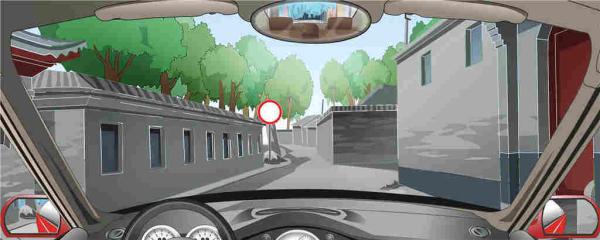
A. Right
B. Wrong
Answer: B
15. When steering failure happens suddenly, if the road condition permits straight movement, drivers should not apply emergency braking.
A. Right
B. Wrong
Answer: A
16. When a bus encounters an unexpected situation or an accident, the driver should do his best to minimize the loss and should never cause a secondary accident or even greater loss for the sake of avoiding danger.
A. Right
B. Wrong
Answer: A
17. Under the circumstances shown in the flash, what should the driver do?
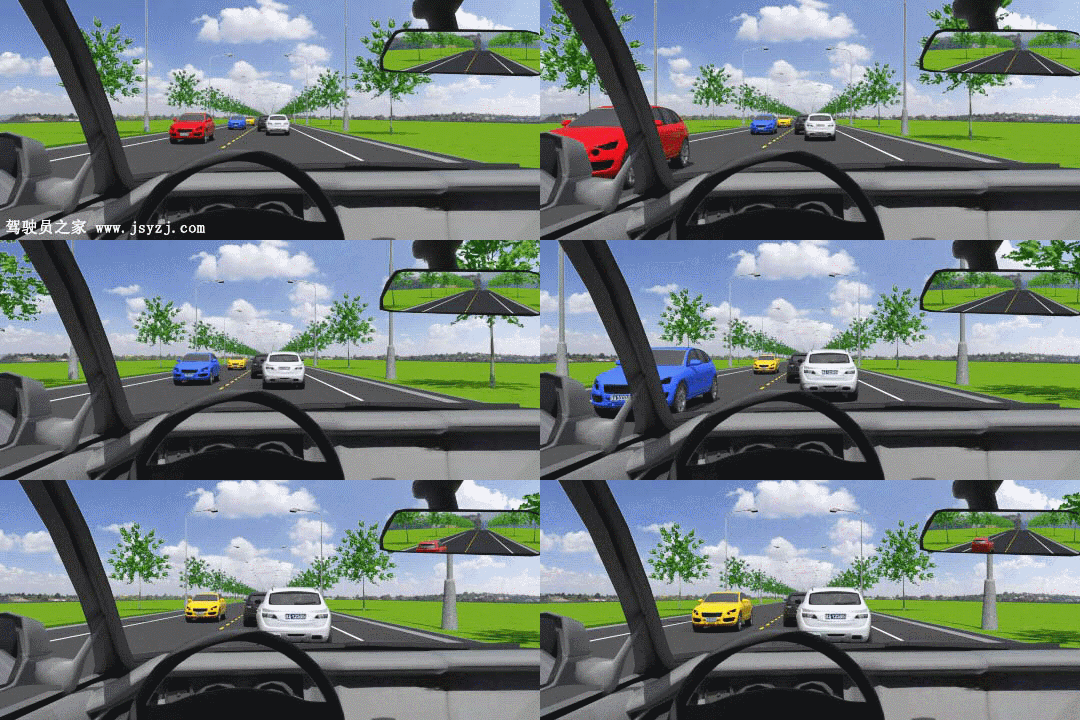
A. Find a chance to overtake the vehicle in front
B. Weave through motor vehicles ahead and pass
C. Reduce speed, stop, and wait in line
D. Sound the horn to urge vehicles in front
Answer: C
18. When a collision occurs on the passenger seat side or the impact is relatively small, which of the following methods is incorrect?
A. Firmly holding the steering wheel
B. Stretching both feet forward
C. Jumping out of the vehicle from one side
D. Leaning body backwards against the seat
Answer: C
19. This sign warns to bypass from either side to avoid roadblock.
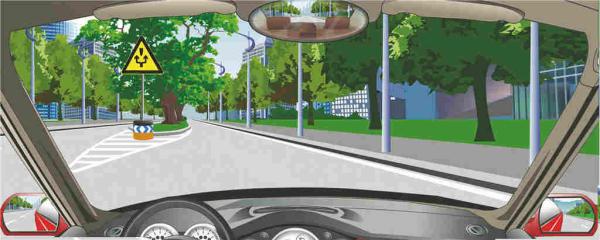
A. Right
B. Wrong
Answer: A
20. The sign on the right warns of a village 200 meters ahead.

A. Right
B. Wrong
Answer: A
21. Which of the following acts are prohibited when passing through a tunnel?
A. Overtaking
B. Stopping
C. Making a U-turn
D. Reversing
Answer: ABCD
22. Drivers may turn right at the intersection when traffic police give these hand signals.

A. Right
B. Wrong
Answer: A
23. Under such circumstances, what should be done by the motor vehicle driver?

A. Overtaking the vehicle in front on its left
B. Overtaking by occupying the opposite lane
C. Overtaking the vehicle in front on its right
D. Following the vehicle in front
Answer: D
24. It is a bad habit for a driver to put his left arm on the window of the vehicle or hold the gear lever in his right hand for a long time.
A. Right
B. Wrong
Answer: A
25. The motor vehicle should speed up and pass rapidly under this situation.

A. Right
B. Wrong
Answer: B
- 有国外驾照的外国人只需考科目一
-
- ENGLISH 英语科目一2026年新题库 驾照:C1 C2
- FRENCH 法语科目一2026年新题库 驾照:C1 C2
- GERMAN 德语科目一2026年新题库 驾照:C1 C2
- SPANISH 西班牙语科目一2026年新题库 驾照:C1 C2
- JAPANESE 日语科目一2026年新题库 驾照:C1 C2
- KOREAN 韩语科目一2026年新题库 驾照:C1 C2
- RUSSIAN 俄语科目一2026年新题库 驾照:C1 C2
- ARABIC 阿拉伯语科目一2026年新题库 驾照:C1 C2
- MOTORCYCLE 摩托车科目一2026年新题库 驾照:D E
- 没有国外驾照的外国人还需要考科目四
-
- ENGLISH 英语科目四2026年新题库 驾照:C1 C2
- KOREAN 韩语科目四2026年新题库 驾照:C1 C2
- MOTORCYCLE 摩托车科目四2026年新题库 驾照:D E