珠海英文科目四考试
1. After a motor vehicle falls into water, the driver won’t be able to open the side doors or windows to escape until water nearly fills up the compartment.
A. Right
B. Wrong
Answer: A
2. The sign on the right warns of a non-motor vehicle lane.

A. Right
B. Wrong
Answer: B
3. The sign on the right indicates that the number of the lanes ahead will increase.

A. Right
B. Wrong
Answer: B
4. If the road condition behind is good, motor vehicle drivers should reverse rapidly.
A. Right
B. Wrong
Answer: B
5. When driving on an expressway, drivers should not frequently change lanes.
A. Right
B. Wrong
Answer: A
6. If a motor vehicle is unable to drive in heavy fog on an expressway due to an accident, what should the driver do?
A. The driver and all passengers should promptly get off the motor vehicle from the left side door
B. Set up a warning sign 100 meters behind the vehicle in the oncoming direction
C. Turn on the hazard lamp and the high-beam
D. Stand in a safe place outside the guardrail
Answer: D
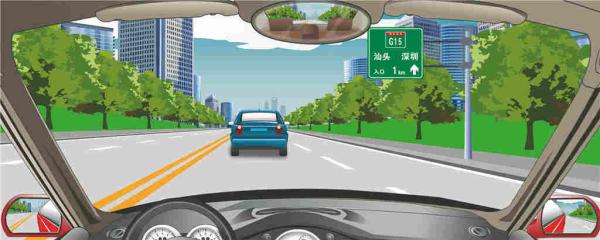
7. The sign in front indicates a one-kilometer distance from the highway entry.
A. Right
B. Wrong
Answer: A
8. When driving on a road covered with ice and snow drivers should not use the emergency brake but can apply a sharp turn.
A. Right
B. Wrong
Answer: B
9. Motor vehicles are permitted to move to the right lane at this intersection.

A. Right
B. Wrong
Answer: B
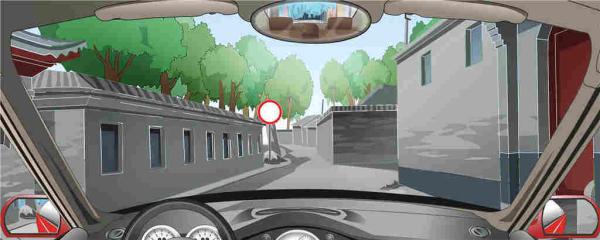
10. The sign on the left indicates vehicles are allowed to drive on the section ahead.
A. Right
B. Wrong
Answer: B
11. If a motor vehicle misses an exit on the expressway, the driver may reverse along the road shoulder.
A. Right
B. Wrong
Answer: B
12. When driving into the traffic flow on a main road from a relief road, drivers should speed up.
A. Right
B. Wrong
Answer: B
13. When the motor vehicle stops on a downhill section how should the driver use the foot brake?
A. Earlier than on a level road
B. Later than on a level road
C. As timely as on a level road
D. Gently depress the foot brake pedal
Answer: A
14. A driver should accelerate in advance to overtake then it is likely to meet with oncoming vehicles.
A. Right
B. Wrong
Answer: B
15. Motor vehicle drivers may make a U-turn in the broken line area as long as it will not affect the normal traffic flow.

A. Right
B. Wrong
Answer: A
16. How many kinds of law-breaking acts are displayed in flash 7?

A. One
B. Two
C. Three
D. Four
Answer: B
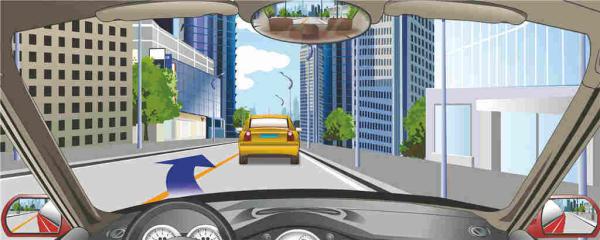
17. Motor vehicles drivers may overtake by borrowing the opposite lane on this kind of road.
A. Right
B. Wrong
Answer: B
18. What should the driver do when seeing these hand signals?
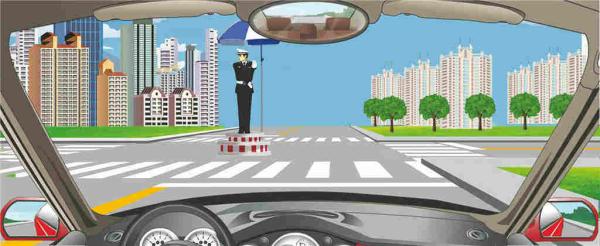
A. Turn left at the intersection
B. Stop and wait
C. Go straight at the intersection
D. Drive to the waiting area for turning left
Answer: B
19. When driving on a muddy road, the driver should hold the steering wheel firmly and speed up to pass through.
A. Right
B. Wrong
Answer: B
20. The sign on the right warns of an embankment road 200 meters ahead.

A. Right
B. Wrong
Answer: A
21. When a motor vehicle skids sideways on a muddy road, the driver should turn the steering wheel in the direction of the rear wheel skidding to properly adjust the direction.
A. Right
B. Wrong
Answer: A
22. Where is the proper parking place for motor vehicles driving on an expressway?
A. On the expressway ramp
B. In the acceleration lane
C. In the deceleration lane
D. In a service area
Answer: D
23. How to pass the intersection when running straight

A. turn on the hazard lights and pass
B. directly speed up and pass straight
C. yield to the vehicle from the right road
D. yield to the vehicle from the left road
Answer: C
24. When a wounded person suffering burns is thirsty he may drink a small quantity of lightly salty water.
A. Right
B. Wrong
Answer: A
25. When two vehicles approach each other on a foggy day, what is the best method of safe driving?
A. Turn on the high-beam
B. Slowdown and maintain a large safety distance
C. Turn on the low-beam
D. Turn on the fog lamp
Answer: B
- 更多英语版驾考试题
-
滨州2026科目四考试英文 莆田考驾照英语试题及答案 海西英文版科目一考试题库 七台河2026英文版驾照考试题库 包头摩托车驾照考试英文题库app下载 北海2026考驾驶证英语试题 宣城2026考驾驶证英语试题 固原英语科目四考试题库 沈阳c1驾照英语版 铜仁中国驾驶证英文版 忻州2026英文驾考科目四 黑河2026年摩托车科目四英文题库345题 德宏摩托车英文驾考题库app手机版 吐鲁番驾照科目一英文版app 武威摩托车科目一英文题库 开封摩托车科目一考试英文400题 池州学车英语 许昌Chinese Driving License Test 淮南境外人员申请中国驾照考试题库摩托车英语 锡林郭勒盟车管所摩托车驾照考试英语
- 有国外驾照的外国人只需考科目一
-
- ENGLISH 英语科目一2026年新题库 驾照:C1 C2
- FRENCH 法语科目一2026年新题库 驾照:C1 C2
- GERMAN 德语科目一2026年新题库 驾照:C1 C2
- SPANISH 西班牙语科目一2026年新题库 驾照:C1 C2
- JAPANESE 日语科目一2026年新题库 驾照:C1 C2
- KOREAN 韩语科目一2026年新题库 驾照:C1 C2
- RUSSIAN 俄语科目一2026年新题库 驾照:C1 C2
- ARABIC 阿拉伯语科目一2026年新题库 驾照:C1 C2
- MOTORCYCLE 摩托车科目一2026年新题库 驾照:D E
- 没有国外驾照的外国人还需要考科目四
-
- ENGLISH 英语科目四2026年新题库 驾照:C1 C2
- KOREAN 韩语科目四2026年新题库 驾照:C1 C2
- MOTORCYCLE 摩托车科目四2026年新题库 驾照:D E