忻州科目四英语书
1. How many kinds of law-breaking acts are displayed in flash 2?

A. One
B. Two
C. Three
D. Four
Answer: B
2. The sign on the right warns of a winding road to the left ahead.

A. Right
B. Wrong
Answer: B
3. When encountering this situation in a residential area the driver should sound the horn continuously.
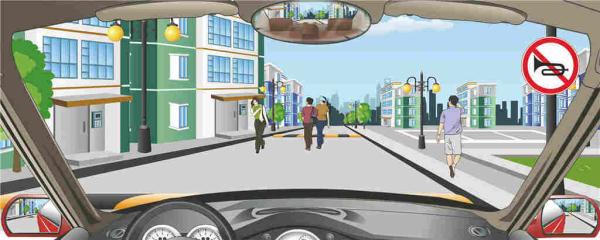
A. Right
B. Wrong
Answer: B
4. This road marker indicates that the minimum speed for this road section is 60 km/hour.

A. Right
B. Wrong
Answer: B
5. The broken white reflective line on the road warns that drivers should drive at a lower speed on the road section ahead.

A. Right
B. Wrong
Answer: A
6. The sign on the right warns of a continuous downhill section ahead.

A. Right
B. Wrong
Answer: B
7. When going straight or turning right, drivers are not allowed to drive on or across the guide lines on both sides of the intersection.
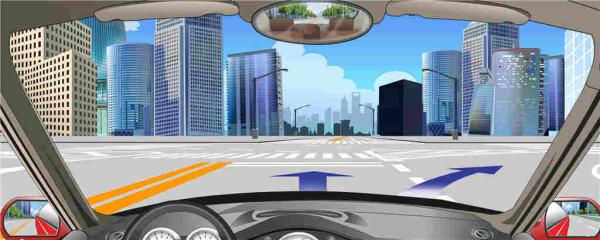
A. Right
B. Wrong
Answer: A
8. Under such circumstance at an intersection. motor vehicle drivers should be prepared to stop and yield at any time.

A. Right
B. Wrong
Answer: A
9. Once inflammable gas causes a fire disaster, it should be put out with water in good time.
A. Right
B. Wrong
Answer: B
10. What should be done by motor vehicle drivers in order to yield politely to such pedestrians?

A. Speed up and bypass in front of the pedestrians
B. Speed up and bypass from behind the pedestrians
C. Reduce speed or stop to yield
D. Continuously sound the horn to alert the pedestrians
Answer: C
11. The driver may not yield when the motor vehicle encounters this situation at the intersection.

A. Right
B. Wrong
Answer: B
12. The driver should turn on the left-turn indicator after entering the acceleration lane on an expressway.
A. Right
B. Wrong
Answer: B
13. When encountering this situation on a mountainous road, motor vehicle drivers should overtake the vehicle in front by speeding up.

A. Right
B. Wrong
Answer: B
14. When encountering this situation in a residential area, the driver should follow them closely.

A. Right
B. Wrong
Answer: B
15. Unless stopping due to obstacles or vehicle breakdown on an expressway, motor vehicles are not allowed to stop to pick up or drop off people or load and unload cargo.
A. Right
B. Wrong
Answer: A
16. The yellow broken line on the curb indicates that vehicles are not allowed to stop and let passengers embark or disembark or load and unload freight at the roadside.
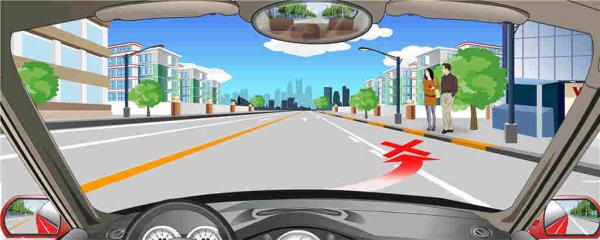
A. Right
B. Wrong
Answer: B
17. When a collision occurs on the passenger seat side or the impact is relatively small, which of the following methods is incorrect?
A. Firmly holding the steering wheel
B. Stretching both feet forward
C. Jumping out of the vehicle from one side
D. Leaning body backwards against the seat
Answer: C
18. Which one of the following statements is correct in this situation?

A. Vehicles are prohibited from passing in the lanes on either side
B. Move into the lane on either side at a reduced speed
C. Move into the lane on the right side
D. Move into the lane on either side at an increased speed
Answer: A
19. Drivers are not allowed to cross these lane-dividing lines when overtaking in the same direction.
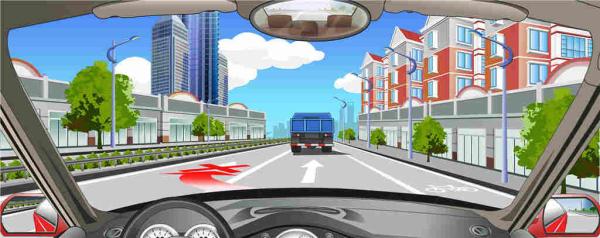
A. Right
B. Wrong
Answer: A
20. When driving in rain or snow, the driver should turn left to stabilize the vehicle if the motor vehicle slides to the right side.
A. Right
B. Wrong
Answer: B
21. The main reason for this accident is that the pedestrian crossed the street in front of the motor vehicle.

A. Right
B. Wrong
Answer: B
22. Motor vehicles are permitted to follow the guidance of the arrow in this picture and enter the lane of an expressway.

A. Right
B. Wrong
Answer: B
23. What should motor vehicle drivers do under such circumstances at night?

A. Turn off the headlamp when approaching
B. Use low-beam
C. Use high-beam
D. Turn off all lamps in advance
Answer: B
24. How many kinds of law-breaking acts are displayed in flash 6?

A. One
B. Two
C. Three
D. Four
Answer: C
25. The sign on the right indicates that no long-sounding horn.

A. Right
B. Wrong
Answer: B
- 有国外驾照的外国人只需考科目一
-
- ENGLISH 英语科目一2026年新题库 驾照:C1 C2
- FRENCH 法语科目一2026年新题库 驾照:C1 C2
- GERMAN 德语科目一2026年新题库 驾照:C1 C2
- SPANISH 西班牙语科目一2026年新题库 驾照:C1 C2
- JAPANESE 日语科目一2026年新题库 驾照:C1 C2
- KOREAN 韩语科目一2026年新题库 驾照:C1 C2
- RUSSIAN 俄语科目一2026年新题库 驾照:C1 C2
- ARABIC 阿拉伯语科目一2026年新题库 驾照:C1 C2
- MOTORCYCLE 摩托车科目一2026年新题库 驾照:D E
- 没有国外驾照的外国人还需要考科目四
-
- ENGLISH 英语科目四2026年新题库 驾照:C1 C2
- KOREAN 韩语科目四2026年新题库 驾照:C1 C2
- MOTORCYCLE 摩托车科目四2026年新题库 驾照:D E