沧州英文科目四考试
1. Which is the correct way to use a fire extinguisher?
A. Stand on the leeward side
B. Direct the fire extinguisher at the source of fire
C. Try to approach the source of fire as close as possible
D. Direct the fire extinguisher at the flames
Answer: B
2. When a bicycle occupies the motor vehicle lane and obstructs the traffic, the driver should sound the horn continuously and speed up to bypass on the left of the bicycle.
A. Right
B. Wrong
Answer: B
3. The sign on the right warns to keep a safe distance on the road ahead.

A. Right
B. Wrong
Answer: B
4. The sign on the right warns of low-lying road ahead.

A. Right
B. Wrong
Answer: A
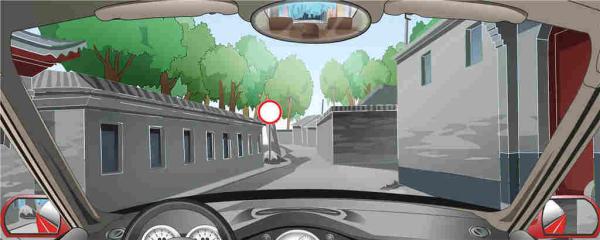
5. The sign on the left indicates vehicles are allowed to drive on the section ahead.
A. Right
B. Wrong
Answer: B
6. When finding a tire burst on the road, the driver should use emergency braking while controlling the direction of the vehicle at the same time to stop the vehicle quickly.
A. Right
B. Wrong
Answer: B
7. Drivers may go straight and pass through when traffic police give these hand signals.

A. Right
B. Wrong
Answer: B
8. Gun powder, explosives and detonating powder belong to which of the following dangerous chemicals?
A. Oxidizing materials
B. Inflammable solid materials
C. Explosives
D. Self-igniting articles
Answer: C
9. This road marker indicates that the minimum speed for this road section is 60 km/hour.

A. Right
B. Wrong
Answer: B
10. Before a motor vehicle enters a tunnel, the driver should adjust the speed in accordance with the indication of the traffic sign at the entrance of the tunnel.

A. Right
B. Wrong
Answer: A
11. In this driving condition, drivers should turn on the high-beam when setting off.

A. Right
B. Wrong
Answer: B
12. If a motor vehicle has an accident on a foggy day and stops on an expressway, which of the following acts is dangerous?
A. Leaving the motor vehicle as soon as possible
B. Standing outside the guardrail as much as possible
C. Turning on the hazard lamp and fog lamp
D. Placing a warning sign behind the vehicle in the oncoming direction
Answer: D
13. Matches, sulfur and red phosphorus belong to which of the following dangerous chemicals?
A. Explosives
B. Oxidizing materials
C. Self-igniting articles
D. Inflammable solid materials
Answer: D
14. The sign on the right warns of an abrupt slope section ahead.

A. Right
B. Wrong
Answer: A
15. The sign on the right indicates that no long-sounding horn.

A. Right
B. Wrong
Answer: B
16. What should be done by the driver who intends to overtake but finds that the vehicle in front is also overtaking?
A. Following the vehicle in front closely and finding a chance to overtake it
B. Accelerating to overtake forcefully
C. Continuously sounding the horn to urge the vehicle in front to yield
D. Refraining from overtaking and letting the vehicle in front overtake first
Answer: D
17. When a motor vehicle encounters thick fog on an expressway and the visibility is poor, the driver should immediately brake and stop.
A. Right
B. Wrong
Answer: B
18. After setting off from the roadside, motor vehicle drivers should speed up as soon as possible and make a sharp left-turn in order to drive into the normal lane.
A. Right
B. Wrong
Answer: B
19. Under such circumstances, what should motor vehicle drivers do?

A. Overtake the vehicle quickly on its left
B. Keep a long braking space
C. Continuously sound the horn to alert the vehicle in front
D. Overtake the vehicle quickly from its right
Answer: B
20. As shown in this picture, before driving to the intersection, vehicles are not allowed to change lanes by crossing the solid white line.
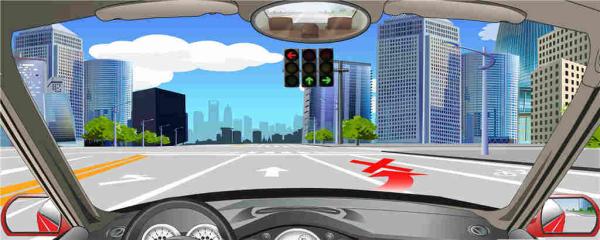
A. Right
B. Wrong
Answer: A
21. The sign on the right warns of a non-motor vehicle lane.

A. Right
B. Wrong
Answer: B
22. The cross-hatched marking indicates an area where vehicle drivers are not allowed to stop.

A. Right
B. Wrong
Answer: A
23. When a fast-moving vehicle encounters an emergency the driver should turn to evade first and then brake to slow down so as to mitigate the damage.
A. Right
B. Wrong
Answer: B
24. When driving on a road covered with ice and snow drivers should not use the emergency brake but can apply a sharp turn.
A. Right
B. Wrong
Answer: B
25. As shown in the flash, what should the driver do when the motor vehicle encounters this situation?

A. Speed up and pass rapidly
B. Stop immediately
C. Sound the horn to indicate the pedestrians to yield
D. Observe the movement of pedestrians and non-motor vehicles before passing
Answer: D
- 有国外驾照的外国人只需考科目一
-
- ENGLISH 英语科目一2027年新题库 驾照:C1 C2
- FRENCH 法语科目一2027年新题库 驾照:C1 C2
- GERMAN 德语科目一2027年新题库 驾照:C1 C2
- SPANISH 西班牙语科目一2027年新题库 驾照:C1 C2
- JAPANESE 日语科目一2027年新题库 驾照:C1 C2
- KOREAN 韩语科目一2027年新题库 驾照:C1 C2
- RUSSIAN 俄语科目一2027年新题库 驾照:C1 C2
- ARABIC 阿拉伯语科目一2027年新题库 驾照:C1 C2
- MOTORCYCLE 摩托车科目一2027年新题库 驾照:D E
- 没有国外驾照的外国人还需要考科目四
-
- ENGLISH 英语科目四2027年新题库 驾照:C1 C2
- KOREAN 韩语科目四2027年新题库 驾照:C1 C2
- MOTORCYCLE 摩托车科目四2027年新题库 驾照:D E