文山英文驾考科目四考试
1. The sign on the right warns of a widened right-hand road ahead.

A. Right
B. Wrong
Answer: B
2. When a motor vehicle on an expressway stops in an emergency due to breakdown or an accident, what should the driver and the passengers do?
A. Stand in front of the motor vehicle
B. Wait in the motor vehicle for rescue
C. Stand behind the motor vehicle
D. Promptly move to the road shoulder on the right side or the emergency lane
Answer: D
3. Unless stopping due to obstacles or vehicle breakdown on an expressway, motor vehicles are not allowed to stop to pick up or drop off people or load and unload cargo.
A. Right
B. Wrong
Answer: A
4. When following other vehicles on the uphill section of a mountain road, what should the driver do if the vehicle in front stops?
A. Overtake from either side of the front vehicle
B. Stop close to the vehicle in front
C. Stop with a larger space from the vehicle in front
D. Sound the horn continuously to warn the other driver
Answer: C
5. The cross-hatched marking indicates an area where vehicle drivers are allowed to stop and wait.

A. Right
B. Wrong
Answer: B
6. When driving on the expressway in a heavy rain, what should the driver do to avoid water sliding phenomenon?
A. Install slide-proof devices
B. Speed up
C. Slow down
D. Continue to depress the brake
Answer: C
7. Motor vehicle drivers don’t need to use any lamp at night when passing through a road section where the street light condition is good.
A. Right
B. Wrong
Answer: B
8. When fixing the unexposed bones in position, it is necessary to exceed the upper and lower joints of the wounded body part.
A. Right
B. Wrong
Answer: A
9. The motor vehicle should speed up and pass rapidly under this situation.

A. Right
B. Wrong
Answer: B
10. When driving on a road covered with ice and snow drivers should not use the emergency brake but can apply a sharp turn.
A. Right
B. Wrong
Answer: B
11. When removing a wounded person suffering spinal fracture, the rescuer should never help the wounded person to walk. He may be carried away with a soft stretcher.
A. Right
B. Wrong
Answer: B
12. The broken and solid white line on the road indicates that crossing is allowed on the solid line side.
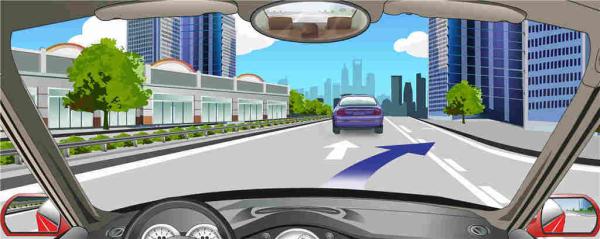
A. Right
B. Wrong
Answer: B
13. The guide arrow on the road surface of this lane indicates that only U-turns are permitted at the intersection ahead.

A. Right
B. Wrong
Answer: B
14. During normal driving, the driver should do his best to run close to or on the central line so as not to allow oncoming vehicles any opportunity to occupy his own route.
A. Right
B. Wrong
Answer: B
15. As shown in the flash, when overtaking a vehicle in front, the driver should make the horizontal distance as large as possible and may cross the solid line if necessary.

A. Right
B. Wrong
Answer: B
16. When encountering a road like this, motor vehicle drivers should downshift in advance to maintain the dynamic of the motor vehicle.

A. Right
B. Wrong
Answer: A
17. When temporarily parking on a raining day, what kind of lamp should the driver turn on?
A. Front and back fog lamps
B. Hazard warning lamp
C. Headlamp
D. Reversing lamp
Answer: B
18. How should the driver use vehicle lights when the motor vehicle enters this intersection?

A. Turn on the right-turn indicator
B. Turn on the hazard lamps
C. No need to turn on any indicators
D. Turn on the left indicator
Answer: C
19. When driving on the highway in foggy, rainy, or snowy weather with a range of visibility between 100 meters and 200 meters, what should motor vehicle drivers do?
A. Turn on the fog lamp, low-beam, clearance lamp and front and rear position lamp
B. Drive at a speed of no more than 60 km/hour
C. Keep a breaking distance of more than 100 meters from the vehicle in front in the same lane
D. Leave the highway from the nearest exit as soon as possible
Answer: ABC
20. The sign on the right indicates that the speed limit is 50km/hour.
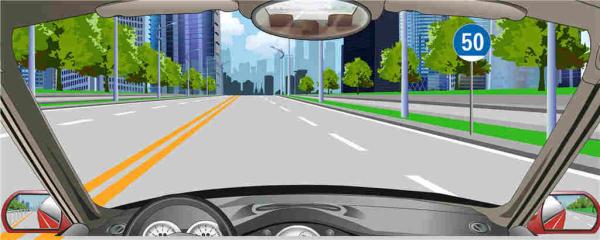
A. Right
B. Wrong
Answer: B
21. When a gas tanker is leaking heavily, which of the following measures is wrong?
A. Cut off the power
B. Wear gas mask and protect gloves
C. Turn off the valve to stop leaking
D. Evacuate people to the leeward side
Answer: D
22. When a tire suddenly bursts on the road, what should not be done by the driver?
A. Keep calm and release the accelerator pedal slowly
B. Hold the steering wheel firmly to ensure the vehicle goes straight
C. Apply emergency braking and stop the vehicle in the shortest possible time
D. Gently depress the brake pedal after the vehicle slows down
Answer: C
23. Under such circumstances, what should be done by the motor vehicle driver who has been overtaken?

A. Sounding the horn to warn the vehicle that overtook
B. Reducing speed or pulling over by the right side
C. Protesting by turning on the high-beam
D. Catching up with and overtaking the vehicle that overtook, and offering admonitions
Answer: B
24. Under such circumstances, what should the motor vehicle driver do?

A. Reduce speed and yield by the left side
B. Reduce speed and yield by the right side
C. Speed up and yield by the left side
D. Go ahead along the original route
Answer: A
25. When parking temporarily in this situation, motor vehicle drivers are allowed to turn the steering wheel left to avoid sliding.

A. Right
B. Wrong
Answer: A
- 有国外驾照的外国人只需考科目一
-
- ENGLISH 英语科目一2026年新题库 驾照:C1 C2
- FRENCH 法语科目一2026年新题库 驾照:C1 C2
- GERMAN 德语科目一2026年新题库 驾照:C1 C2
- SPANISH 西班牙语科目一2026年新题库 驾照:C1 C2
- JAPANESE 日语科目一2026年新题库 驾照:C1 C2
- KOREAN 韩语科目一2026年新题库 驾照:C1 C2
- RUSSIAN 俄语科目一2026年新题库 驾照:C1 C2
- ARABIC 阿拉伯语科目一2026年新题库 驾照:C1 C2
- MOTORCYCLE 摩托车科目一2026年新题库 驾照:D E
- 没有国外驾照的外国人还需要考科目四
-
- ENGLISH 英语科目四2026年新题库 驾照:C1 C2
- KOREAN 韩语科目四2026年新题库 驾照:C1 C2
- MOTORCYCLE 摩托车科目四2026年新题库 驾照:D E