山东科目四英语book
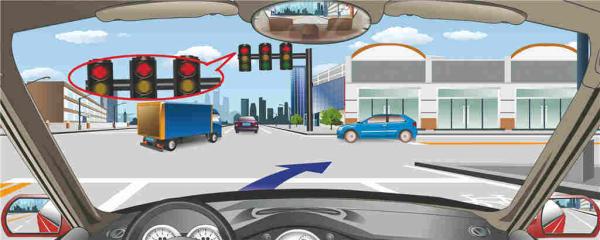
1. The driver may turn right directly at this intersection.
A. Right
B. Wrong
Answer: B
2. When driving, besides paying attention to keeping a safe distance from the vehicle in front, drivers should also be prudent when braking so as to avoid a rear-end collision caused by a vehicle behind.
A. Right
B. Wrong
Answer: A
3. Motor vehicles are permitted to move to the right lane at this intersection.

A. Right
B. Wrong
Answer: B
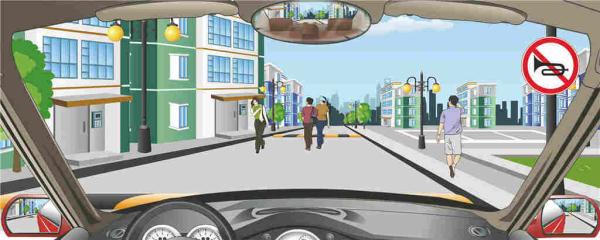
4. When encountering this situation in a residential area the driver should sound the horn continuously.
A. Right
B. Wrong
Answer: B
5. When the engine suddenly stalls on the road and cannot be restarted, the driver should pull over in a timely fashion and identify the cause of the stalling.
A. Right
B. Wrong
Answer: A
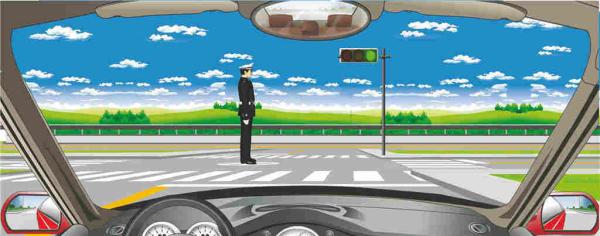
6. Drivers may go ahead when traffic polices posture is like this.
A. Right
B. Wrong
Answer: A
7. Which is the wrong measure to avoid tire burst?
A. Reduce tire pressure
B. Check tires regularly
C. Remove foreign matters from the tire tread grooves timely
D. Replace tires that have cracks or deep cuts
Answer: A
8. When a wounded person is beneath the wheel or cargo, we should help him out immediately by pulling the limbs of the wounded.
A. Right
B. Wrong
Answer: B
9. Motor vehicles on this kind of road are only allowed to overtake the vehicle in front from left.

A. Right
B. Wrong
Answer: A
10. Drivers may temporarily cross these central solid double yellow lines when overtaking.

A. Right
B. Wrong
Answer: B
11. It is correct for the driver to drive on an expressway in the way shown in the flash.

A. Right
B. Wrong
Answer: B
12. Which one of the following vehicle types is not allowed to pass, as indicated by the right-hand sign?

A. Large trucks
B. Large buses
C. Motor vehicles of all kinds
D. Small vans
Answer: C
13. When running on an expressway with three lanes in each direction, which one of the following lanes is not appropriate for the motor vehicle to use if its speed ranges between 90 kilometers per hour and 110 kilometers per hour?
A. The far left lane
B. The middle lane
C. The far right lane
D. Any lane
Answer: A
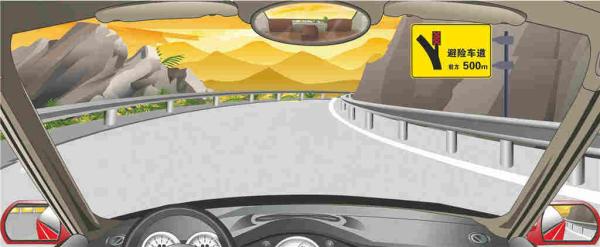
14. The sign on the right side warns of an emergency lane 500 meters ahead.
A. Right
B. Wrong
Answer: A
15. The distance-ascertaining section of an expressway is used for the drivers to ascertain the safety distance when the speed is 100 kilometers per hour.

A. Right
B. Wrong
Answer: A
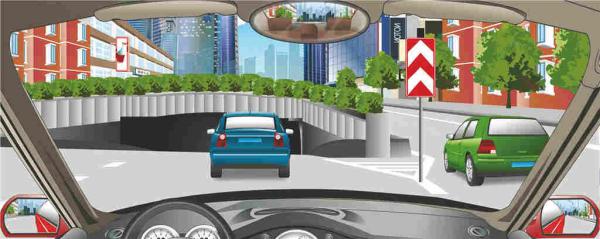
16. The sign on the right warns of no passing on either side of the road ahead.
A. Right
B. Wrong
Answer: B
17. What is the most frequent problem for driving on a muddy road?
A. High resistance force
B. Sideways slide
C. The motor vehicle bumps
D. Steering failure
Answer: B
18. When driving on a damp and slippery road, drivers should avoid using the emergency brake to his best ability.
A. Right
B. Wrong
Answer: A
19. When the tire pressure is too low, what will happen if the tire changes its shape in waves and increases in temperature due to fast movement?
A. Unstable tire pressure
B. Even lower tire pressure
C. Driving resistance increases
D. Tire burst
Answer: D
20. When there is a braking failure on a downhill road the driver should change the gear to one position or two positions lower, and control the speed by taking advantage of the braking role of the engine.
A. Right
B. Wrong
Answer: A
21. What does this sign on the fly-over junction indicate?

A. Turn right
B. Drive straight or turn left
C. Drive straight or turn right
D. Take a U-turn under bridge
Answer: B
22. The sign on the right warns drivers to yield for oncoming motor vehicles.

A. Right
B. Wrong
Answer: B
23. After a traffic accident, what is the most effective measure to prevent secondary accidents?
A. Evacuate all passengers
B. Turn on the hazard lamps
C. Mark the original place of the injured persons
D. Properly place the danger warning sign
Answer: ABD
24. Having driven a large passenger vehicle (carrying 44 passengers, permitted carrying capacity 44) equipped with sleepers at 44km/hour on a frozen road, at 58 km mark by 500m on 540 County Road in Yanhe County, Mr. Luo sideslipped and left the road, killing 15 people and injuring 27. Which of the following law-breaking acts did Mr. Luo commit?
A. Exceeding the carrying capacity of the passenger vehicle
B. Speeding
C. Fatigued driving
D. Improper driving
Answer: B
25. When a motor vehicle accidentally hits a guardrail of a highway, the driver should stabilize and adjust the steering wheel properly, and refrain from turning the steering wheel drastically.
A. Right
B. Wrong
Answer: A
- 有国外驾照的外国人只需考科目一
-
- ENGLISH 英语科目一2026年新题库 驾照:C1 C2
- FRENCH 法语科目一2026年新题库 驾照:C1 C2
- GERMAN 德语科目一2026年新题库 驾照:C1 C2
- SPANISH 西班牙语科目一2026年新题库 驾照:C1 C2
- JAPANESE 日语科目一2026年新题库 驾照:C1 C2
- KOREAN 韩语科目一2026年新题库 驾照:C1 C2
- RUSSIAN 俄语科目一2026年新题库 驾照:C1 C2
- ARABIC 阿拉伯语科目一2026年新题库 驾照:C1 C2
- MOTORCYCLE 摩托车科目一2026年新题库 驾照:D E
- 没有国外驾照的外国人还需要考科目四
-
- ENGLISH 英语科目四2026年新题库 驾照:C1 C2
- KOREAN 韩语科目四2026年新题库 驾照:C1 C2
- MOTORCYCLE 摩托车科目四2026年新题库 驾照:D E