黄山科目四英语题
1. At this moment, the driver may speed up and pass the intersection rapidly.
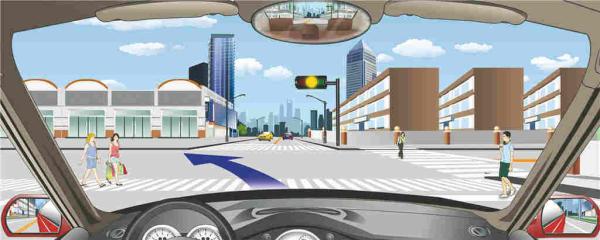
A. Right
B. Wrong
Answer: B
2. Mr. Hao drove a heavy dump truck with 84.84 tons of cargo (truck allowing for 15.58 tons). When he drove on the No 262 provincial highway in Luanxian County, at the spot of 34 kilometers mark by 623 meters, his truck overturned onto the sideway after a rear-end collision with another truck in front carrying 45.85 tons of cargo(a truck allowing for 1.71 tons). As a result of this accident, 19 people were killed and 17 injured. What is the common illegal act of the two drivers?
A. Speeding
B. Overloaded
C. Fatigued driving
D. Driving after drinking
Answer: B
3. The sign on the right warns of a wildlife protection area ahead.

A. Right
B. Wrong
Answer: B
4. What should the driver do upon finding that one of the right tires is leaking while driving?
A. Brake swiftly to slow down
B. Brake slowly to slow down
C. Turn to the left side swiftly
D. Apply emergency braking
Answer: B
5. The sign on the left indicates U-turn is allowed here.

A. Right
B. Wrong
Answer: A
6. What should the driver do to ensure safe driving when the motor vehicle encounters this situation in a residential area?

A. Sound the horn to warn the pedestrians
B. Speed up and pass as quickly as possible
C. Retain a normal speed
D. Slow down and prepare to stop
Answer: D
7. Under such circumstances, what should be done by the motor vehicle driver?

A. Reducing speed to give the right of way to the non-motor vehicle
B. Continuously sounding the horn to warn the vehicle in front to yield
C. Bypassing on the left of the non-motor vehicle
D. Accelerating to overtake by occupying the opposite lane
Answer: A
8. The broken white line on the right side of the road indicates that drivers are allowed to change lanes by crossing the line.
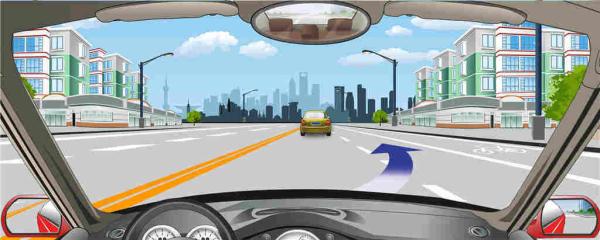
A. Right
B. Wrong
Answer: A
9. Mr. Tao drove a midsize bus with 33 passengers. At the spot of 163 kilometers on the South Xuping Expressway, the bus clashed at a speed of 120 kilometers per hour with Mr. Ans minibus parked without any warning signs on the inside lane, due to breakdown after an accident. The midsize bus overturned after collided with the guardrail on the right-hand side. As a result of the accident, 16 people were killed and 15 injured. What are the main illegal acts of the two drivers?
A. Mr. Tao carried more passengers than permitted
B. Mr. Tao exceeded speed limit
C. Mr. An failed to place any warning signs in accordance with relevant stipulations
D. Mr. An was illegally parked
Answer: ABC
10. The sign on the right warns for disabled people ahead.
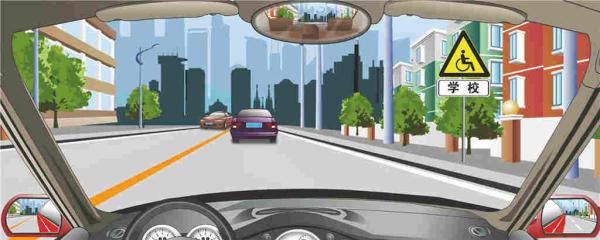
A. Right
B. Wrong
Answer: A
11. For evading an emergency on an expressway, which of the following principles should drivers stick to?
A. Evading vehicles first and objects later
B. Evading people first and objects later
C. Evading vehicles first and people later
D. Evading objects first and people later
Answer: B
12. When rescuing a wounded person who has been poisoned by toxic gas, the first measure is to send him to a place with fresh air so that he will not continue to be poisoned.
A. Right
B. Wrong
Answer: A
13. The sign in front indicates that vehicles except public buses are not allowed to drive in this lane.

A. Right
B. Wrong
Answer: A
14. What should the driver do when seeing these hand signals.

A. Stop and wait
B. Go straight and pass through the intersection
C. Turn right at the intersection
D. Turn left at the intersection
Answer: A
15. When there is a sudden braking failure on the road, what should be done by the driver?
A. Firmly holding the steering wheel and controlling the direction
B. Immediately changing to a low gear to reduce speed
C. Using the stopping brake to reduce speed
D. Turning on the hazard lamps
Answer: ABCD
16. After setting off from the roadside, motor vehicle drivers should speed up as soon as possible and make a sharp left-turn in order to drive into the normal lane.
A. Right
B. Wrong
Answer: B
17. Mr. Peng drove a heavy semi-trailer tractor with 37.7 tons of cargo (capacity 25 tons). When descending a slope on the Daguang Expressway, the tractor had a rear-end collision with Mr. Li’s heavy dump truck (carrying 3.17 cubes of loess and 24 passengers in the container) occupying the emergency lane. As a result of this accident, 16 people were killed and 13 injured. What are the main illegal acts in this case?
A. Mr Peng exceeded the speed limit
B. Mr. Peng’s tractor carried more cargo than limited
C. Mr Li illegally drove in the emergency lane
D. Mr. Li’s truck illegally carried passengers in the container
Answer: BCD
18. In order to keep safe when driving on the highway, which ones of the following statements are prohibited acts?
A. Reversing, moving against regulations, making a U-turn by crossing the central divider, or stopping in the lane.
B. Riding or rolling on the lane-dividing line or driving on the shoulder
C. Overtaking on ramps, accelerations lanes, or deceleration lanes.
D. Testing vehicles or learning to drive a vehicle
Answer: ABCD
19. The sign on the right indicates the road width ahead is limited to 3 meters.

A. Right
B. Wrong
Answer: A
20. Mr. Yang drove an adapted minibus (capacity 9 people and carrying 64 passengers, including 62 kindergarten pupils). When driving in Ma Caogou Village of Yu Linzi County, the bus used the lane for oncoming traffic and had a head-on colision with a heavy dump truck. As a result of this accident, 22 people were killed and 44 injured. What are the main illegal acts in this case?
A. The truck exceeded the speed limit
B. Illegal adaptation of a motor vehicle
C. The minibus carried more passengers than capacity
D. Driving in the opposite direction lane
Answer: BCD
21. The sign on the right indicates a one-kilometer distance from the ETC toll station.

A. Right
B. Wrong
Answer: A
22. When a motor vehicle needs to stop for inspection after having an accident on an expressway, where should the driver park?
A. On the far outer lane
B. On the inner lane
C. On the emergency lane
D. In the triangle area on the ramp
Answer: C
23. A motor vehicle may stop and yield if it encounters any problem when changing to the driving lane from an acceleration lane.
A. Right
B. Wrong
Answer: B
24. If the road condition behind is good, motor vehicle drivers should reverse rapidly.
A. Right
B. Wrong
Answer: B
25. What should the driver pay attention to when the motor vehicle passes a school?
A. Observe the traffic signs and markings
B. Slow down and pass slowly
C. Prohibited from sounding the horn
D. Pass rapidly
Answer: ABC
- 有国外驾照的外国人只需考科目一
-
- ENGLISH 英语科目一2026年新题库 驾照:C1 C2
- FRENCH 法语科目一2026年新题库 驾照:C1 C2
- GERMAN 德语科目一2026年新题库 驾照:C1 C2
- SPANISH 西班牙语科目一2026年新题库 驾照:C1 C2
- JAPANESE 日语科目一2026年新题库 驾照:C1 C2
- KOREAN 韩语科目一2026年新题库 驾照:C1 C2
- RUSSIAN 俄语科目一2026年新题库 驾照:C1 C2
- ARABIC 阿拉伯语科目一2026年新题库 驾照:C1 C2
- MOTORCYCLE 摩托车科目一2026年新题库 驾照:D E
- 没有国外驾照的外国人还需要考科目四
-
- ENGLISH 英语科目四2026年新题库 驾照:C1 C2
- KOREAN 韩语科目四2026年新题库 驾照:C1 C2
- MOTORCYCLE 摩托车科目四2026年新题库 驾照:D E