曲靖英语驾考科目四
1. What should be done by drivers in order to drive safely on the road in this condition?

A. Make a large turn on the left side of the road
B. Make a turn on the central line of the curve
C. Make a small turn on the right side of the road
D. Make a turn by borrowing the opposite lane
Answer: C
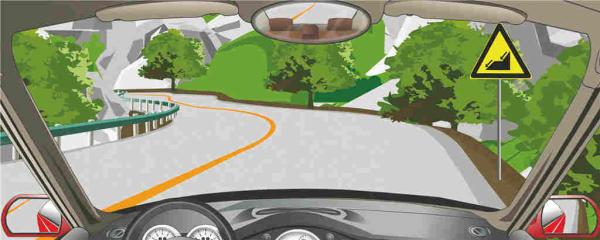
2. The sign on the right side warns of an abrupt downhill section ahead.
A. Right
B. Wrong
Answer: B
3. When the electric equipment and gasoline of a motor vehicle catches fire, the driver may extinguish the fire with water.
A. Right
B. Wrong
Answer: B
4. When a bus encounters an unexpected situation or an accident, the driver should do his best to minimize the loss and should never cause a secondary accident or even greater loss for the sake of avoiding danger.
A. Right
B. Wrong
Answer: A
5. A driver should speed up when passing through road sections with this traffic marking.

A. Right
B. Wrong
Answer: B
6. The sign on the right warns of low-lying road ahead.

A. Right
B. Wrong
Answer: A
7. The sign on the right warns of a danger from rockfall on the left side.

A. Right
B. Wrong
Answer: A
8. Under such circumstances, what should be done by the motor vehicle driver?

A. Overtaking the vehicle in front on its left
B. Overtaking by occupying the opposite lane
C. Overtaking the vehicle in front on its right
D. Following the vehicle in front
Answer: D
9. The sign on the left indicates the destinations of two highway directions

A. Right
B. Wrong
Answer: A
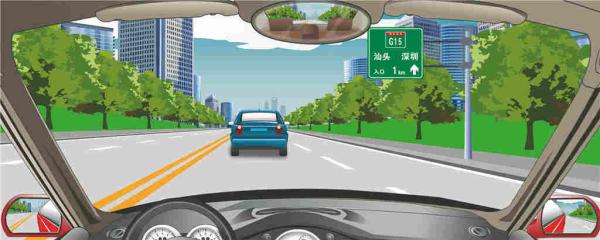
10. The sign in front indicates a one-kilometer distance from the highway entry.
A. Right
B. Wrong
Answer: A
11. What should the driver do upon finding that one of the right tires is leaking while driving?
A. Brake swiftly to slow down
B. Brake slowly to slow down
C. Turn to the left side swiftly
D. Apply emergency braking
Answer: B
12. When there is a braking failure on a downhill road, if there is no other alternative, the driver may rub the vehicle body against the rocks and trees on roadside to force the vehicle to slow down and stop.
A. Right
B. Wrong
Answer: A
13. Under such circumstances, what should be done by motor vehicle drivers in order to maintain safe driving?

A. Sound the horn or turn on the headlamps
B. Reduce speed or drive on the right side
C. Keep to the central line as best as possible
D. Drive on the left side of the road
Answer: B
14. When encountering an obstacle on one side of the road, what should vehicles do as they approach each other?
A. The vehicle not encountering an obstacle should Yield to the other vehicle
B. The slower vehicle should yield to the faster
C. The vehicle encountering an obstacle should yield to the other vehicle
D. The faster vehicle should yield to the slower
Answer: C
15. What is the meaning of the sign on the right?

A. Long-time parking permitted
B. Temporary parking permitted
C. Long waiting for passengers permitted
D. No parking
Answer: B
16. When following other vehicles on a foggy day, what should the driver do?
A. Maintain a large safety distance
B. Turn on the high-beam
C. Turn on the low-beam
D. Sound the horn in due time
Answer: A
17. How to run when encountering this situation at the intersection?

A. stop and wait
B. obey the traffic lights
C. run straight on the right side
D. may turn right
Answer: A
18. After a motor vehicle enters the ramp from an expressway, it should reduce its speed below the prescribed speed limit.
A. Right
B. Wrong
Answer: A
19. What should be done by the driver who intends to overtake but the motor vehicle in front neither reduces its speed nor allows the right of way?
A. Continuously sounding the horn and accelerating to overtake
B. Accelerating and continuing to overtake
C. Refraining from overtaking
D. Following the vehicle in front closely and finding a chance to overtake
Answer: C
20. When encountering children in this condition, what should motor vehicle drivers do?

A. Go ahead by following the children closely
B. Speed up and overtake from the left side of the children
C. Sound the horn to alert the children
D. Reduce speed or stop to yield
Answer: D
21. In order to keep safe when driving on the highway, which ones of the following statements are prohibited acts?
A. Reversing, moving against regulations, making a U-turn by crossing the central divider, or stopping in the lane.
B. Riding or rolling on the lane-dividing line or driving on the shoulder
C. Overtaking on ramps, accelerations lanes, or deceleration lanes.
D. Testing vehicles or learning to drive a vehicle
Answer: ABCD
22. When a motor vehicle skids sideways on a muddy road, the driver should turn the steering wheel in the direction of the rear wheel skidding to properly adjust the direction.
A. Right
B. Wrong
Answer: A
23. How should motor vehicle drivers make a U-turn at the intersection ahead?

A. Make a U-turn in the waiting area for turning left
B. Make a U-turn at the broken line area of the Intersection
C. Wait until the left-turn indicator is on
D. Wait until the straight-going signal is on
Answer: B
24. When a motor vehicle moves through water, the driver should try to maintain a constant speed and sufficient power and pass through without stopping.
A. Right
B. Wrong
Answer: A
25. When a motor vehicle catches fire, the driver should manage to park the vehicle in an open place far away from urban areas, buildings, trees, other motor vehicles and flammable materials.
A. Right
B. Wrong
Answer: A
- 有国外驾照的外国人只需考科目一
-
- ENGLISH 英语科目一2026年新题库 驾照:C1 C2
- FRENCH 法语科目一2026年新题库 驾照:C1 C2
- GERMAN 德语科目一2026年新题库 驾照:C1 C2
- SPANISH 西班牙语科目一2026年新题库 驾照:C1 C2
- JAPANESE 日语科目一2026年新题库 驾照:C1 C2
- KOREAN 韩语科目一2026年新题库 驾照:C1 C2
- RUSSIAN 俄语科目一2026年新题库 驾照:C1 C2
- ARABIC 阿拉伯语科目一2026年新题库 驾照:C1 C2
- MOTORCYCLE 摩托车科目一2026年新题库 驾照:D E
- 没有国外驾照的外国人还需要考科目四
-
- ENGLISH 英语科目四2026年新题库 驾照:C1 C2
- KOREAN 韩语科目四2026年新题库 驾照:C1 C2
- MOTORCYCLE 摩托车科目四2026年新题库 驾照:D E